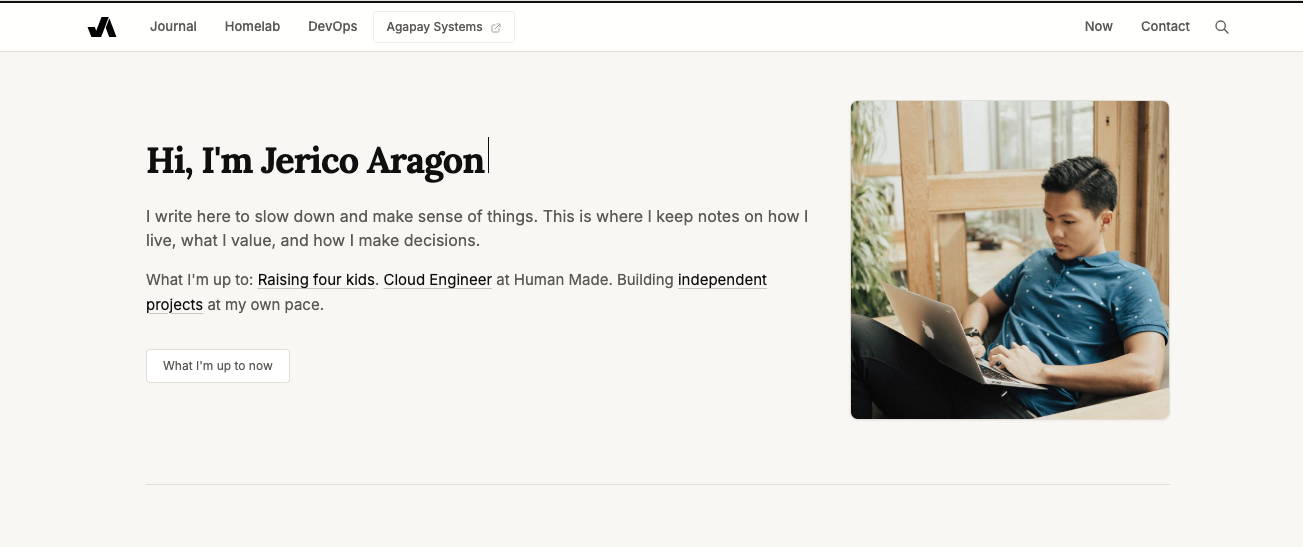
After five years, I finally rebuilt my personal site. I consolidated everything into one place and focused less on positioning, more on carving my personal space in the web (like the old dayz).
The site now has four areas, each with a clear purpose. That removes one of my biggest blockers: deciding where something belongs.
We made a big and risky decision this year. There was an opportunity cost if we don’t act and it could not be delayed further. This decision meant that our 6-months emergency fund was spent, and I’m in-debt for the next two years (if our income and spending remains the same).
As the sole provider, it keeps me up at night. It forced me to re-assess our situation.
That is spilt milk under the bridge. I have no regrets with the decision, that purchase was wise for our fast growing kids.
What I want to focus on now is how to move ahead. How can I reduce the risk?
Expanding my luck surface area
Luck is a big factor on where I am now. I can’t control luck, but I can increase my chances of getting lucky by planting seeds, growing my weak ties, expanding my luck surface area.
Prioritize working on things I can show
Given the choices of things to work on, lean on tasks I can use as portfolio or demonstrate my technical depth.
Document the work I do publicly
I have not been very good at writing and documenting things I do at work. I assume it’s too niche, too AWS, too WordPress.
It does not matter. Work ends when it’s documented, not when the PR is merged.
Rebuild my full-stack web dev portfolio
When I shifted into cloud engineering, I stopped building web apps anymore. I’m not a senior-level cloud engineer, but I’m also no longer the web developer I used to be.
I forgot I enjoy doing it until recently when I had an opportunity to work on a small feature that required a UI. I had so much fun. I also forgot I don’t need to wait for opportunities at work to build apps, to solve actual problems. There are a lot of problems where a little bit of software can make a difference.
I’ll find and make more opportunities to do more of software development, which also gives me another path if cloud engineering does not ultimately work out.
How we construct meaning from experience is a choice
I forgot that I have a choice on how I construct meaning from experience.
My default, immediate meaning of his action was he does not appreciate all the understanding I’ve already done for him. I go on this toxic mental cycle how I don’t deserve to be treated like this, triggering me even more.
The plain reality is my kid have sensory processing issues that’s out of his control, and have a difficulty verbalizing what he’s feeling. The easiest way he could unload his frustration is by hitting me, not out malice, but out of difficulty of other ways to express it.
How I try to see it now
Maybe it’s because he knows deep down, no matter what he do, I would still be there for him. Which is true. I make sure he always feel loved. Him venting his frustration to me could be a sign of the security he feels around me.
Ever since I shifted how I see it, I barely gets triggered anymore.
Now, it mainly reminds me that it’s because he is secure with me.
I still don’t tolerate hitting of course. With clearer head (not being angry or triggered myself), I was able to figure out a way to redirect him. Asking him to “double high five” breaks his pattern of using both his hands to hit. Immediately followed by fist bump and align, it kept him occupied enough to briefly interrupts his overwhelmed head.
Sometimes, that’s all it takes to bring him back to his regulated state.
He’s not angry, I’m not angry, he feels better, I feel better. All just from a change of meaning.
I volunteered to help organize a 3-day event, with the date set 10 months in advance. My plan was I’m going to stay near the venue for the entire duration.
A week before the event, my son’s school announced that they will have a family day on the last day of the event.
There was no question about whether I would attend. The only question was how can I make it work.
It’s very clear to me that family comes first.
I was able to be at home by 4:00am, woke up at 6:30am and drove to our family day venue and be there just in time at 7:30am.
Afterward, I took another nap, then drove back to the event.
Was it exhausting? Yes. But I had no internal conflict. My decision was aligned with my values. It was an easy choice.
Later in my freelance career, I learned the term value-based pricing. It’s a pricing strategy where the price of my service is set based on the value it provides.
This shifted on how I look at things. I started looking at how businesses generate revenue and focus where I could help increase it or reduce costs, then I anchor my rate based off that. It worked well for me. I gravitated to companies where my skills truly added value, which made my work more enjoyable. Hindi lang basta pera.
Thinking this way has become second-nature.
Now, I try to apply it in reverse: value-based giving.
For instance, if I needed a medicine now, I’d book Grab Pabili to have someone buy it for me and bring it to my house. The time and energy I save are worth more than the total cost of the service. It makes it easy to give extra.
Another way I apply it is when I have to hire for help. I don’t haggle. I hire people to get to the same goal, I want to reach it where everyone feels they are paid fairly. Then add extra upon completion.
One of my kids threw my phone at the TV out of anger. It broke.
What made it hard for me to handle is it was intentional. If it wasn’t, I would have understood. He doesn’t seem to grasp the consequences.
I don’t like how I reacted: I shouted and hit his butt harder than I should have. I felt guilty.
What hurt even more was when I reached to comfort him, and he flinched, afraid I might hit him again.
I have to remember: kids are at the mercy of their nervous system. They still don’t have full control over their impulses and reaction. Their behavior is their best attempt to meet a need.
Instead of focusing on their actions, ask: What need are they trying to meet?
Whose job is it to teach them how to properly meet their needs? Mine.
My need was to make him understand that what he did was not good. But the way I reacted only reinforced the same pattern: get angry, act on impulse, and lash out. It showed him that reacting with anger and aggression is okay.
What should have I done instead?
Why did my son throw my phone at the TV? He was trying to be heard. He had been pleading to change the channel, but I was too focused on my other kid at that time. His best attempt to get my attention? Throw my phone. It wasn’t right, but it was effective.
I still think anger has a purpose. It’s okay to express it to let the kids know they crossed a boundary, but only when calm inside. What I did wrong was I acted only to relieve myself of anger, without really thinking if it’s the best way to teach.
Next time: Understand what need are they trying to meet, then guide them toward a better way to meet it.
I went to bed earlier than usual on a Sunday night with the idea of getting a full-night sleep. I really want to start the week right.
Julian woke up at 2:00 am and couldn’t fall back asleep.
He finally went back to sleep at 2:55 am, but now I’m the one who can’t sleep.
It’s Monday, and my eldest has a morning class. I have to wake up at 6:40 am to drive him to school.
The situation sounds horrible, but I actually don’t mind it. I see it as part of the full parenting experience to have this struggle. Though, I could not deny I’m struggling.
Despite the situation, I still have a lot of things I’m grateful for.
For the help we receive in preparing Joshua for his class. All I have to do is to drive.
For Joshua gently waking me up by kissing me, then whispering “Dad, wake up I’m going to be late na” when I could not get up by myself.
For Johan, who’s already awake and wants to join the school run just to spend time with me since I’m not the one who usually takes him. He says “I want to go with you.”
I’ve been in a state of catching up for a couple of months now. Months! It’s frustrating, to say the least. I can’t perform at my best, I don’t feel good about myself, which sinks me deeper.
One of the biggest source of frustration is not being proud of what I produce.
Nobody operates 100% all the time.
I think for now, I should accept that I’m not back at that level yet.
Focus on small wins.
Try to increase capacity
The effective way to increase my capacity is to exercise. A mix of interval and endurance training. It feels counterintuitive to make time for this when my time and energy are already limited, but I distinctly remember when I was regularly doing it, my stress response was better. I’m more fight than flight.
TODO: Bring workout equipments from office to home to have less friction working out
Make fast decisions
With a lot on my plate, I often get stuck which to get started to. It does not matter which, flip a coin. Make fast decisions.
What’s the worse thing that could happen?
Sometimes the body has a disproportionate response to a situation.
A good way for reality check is to ask: what’s the worst thing that could happen?
I get fired. That’s it. It’s not the end of the world if it happens.
I have a solid emergency fund in place, and we haven’t fallen too deep into lifestyle inflation. My family can easily adjust if needed. Plus, there’s still strong demand for my specific skill set.
-
Anyway, I’m pretty sure this isn’t going to be forever (anicca). Hoping to catch-up soon!
I have too many ongoing projects. It perfectly reflects the state of my mind. Everything is in my head, without structure.
No project management, no direction, no goal or pressure to finish.
What’s happening is I start a new project. I get stuck or I get to a point that I have to make a decision but for some reason can’t. I let it simmer in my head. Then I start a new project.
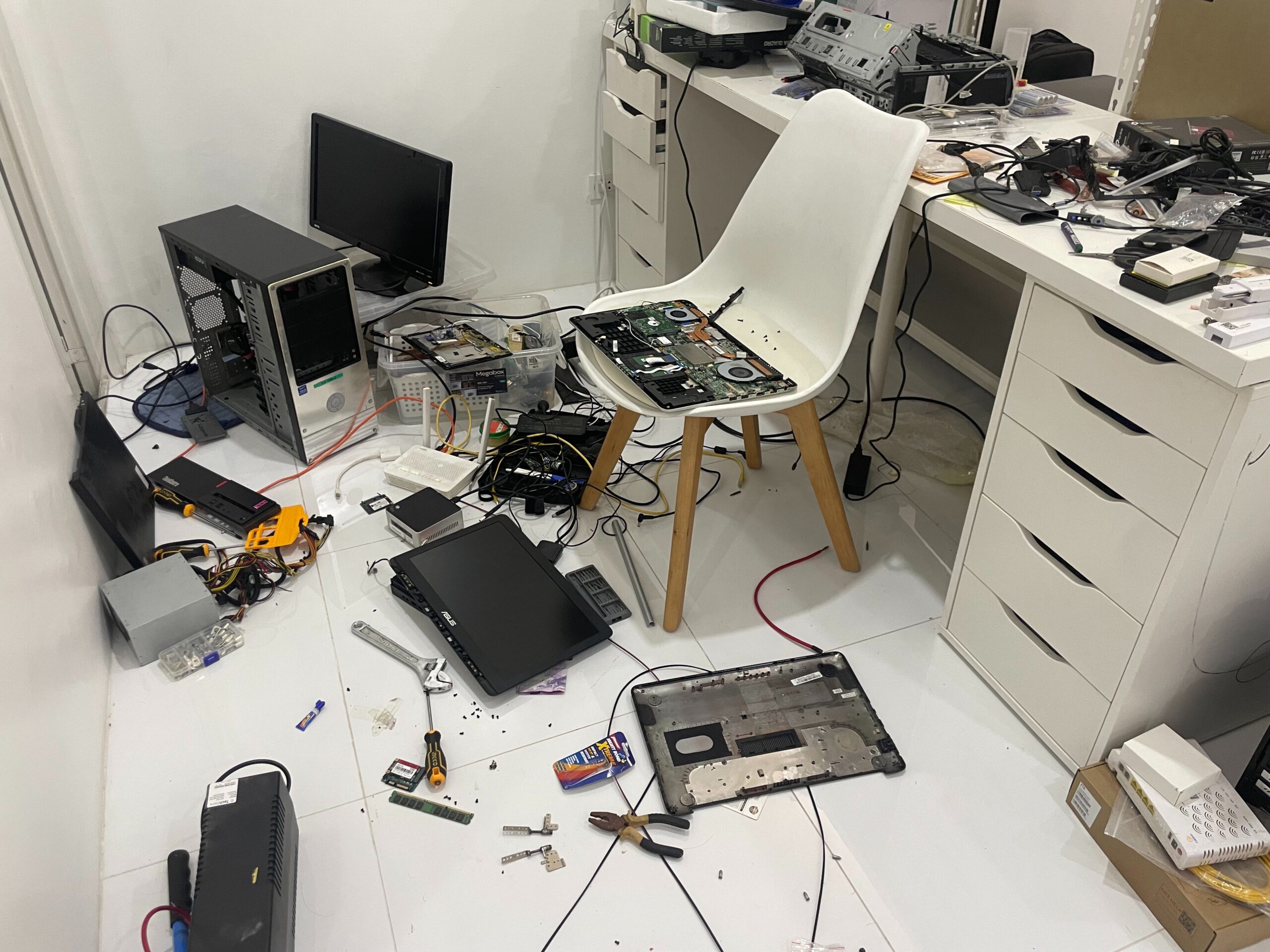
The worst part is that my office has become an ever-growing pile of unfinished projects.
Possible solution
One solution I’ve come up with is to pre-decide in advance what I should do each day and then consistently follow through. I call this approach “Project DOTED,” which stands for “Do One Thing Everyday.”
Criteria
To help with the decisions on what to do, these are the guidelines:
Focus on things that would reduce clutter in my office
Small enough that it can fit in my family and work life.
Notable enough that it chip-off towards a completion of a project
Lastly, avoid new projects. Purchase freeze until things are manageable again.
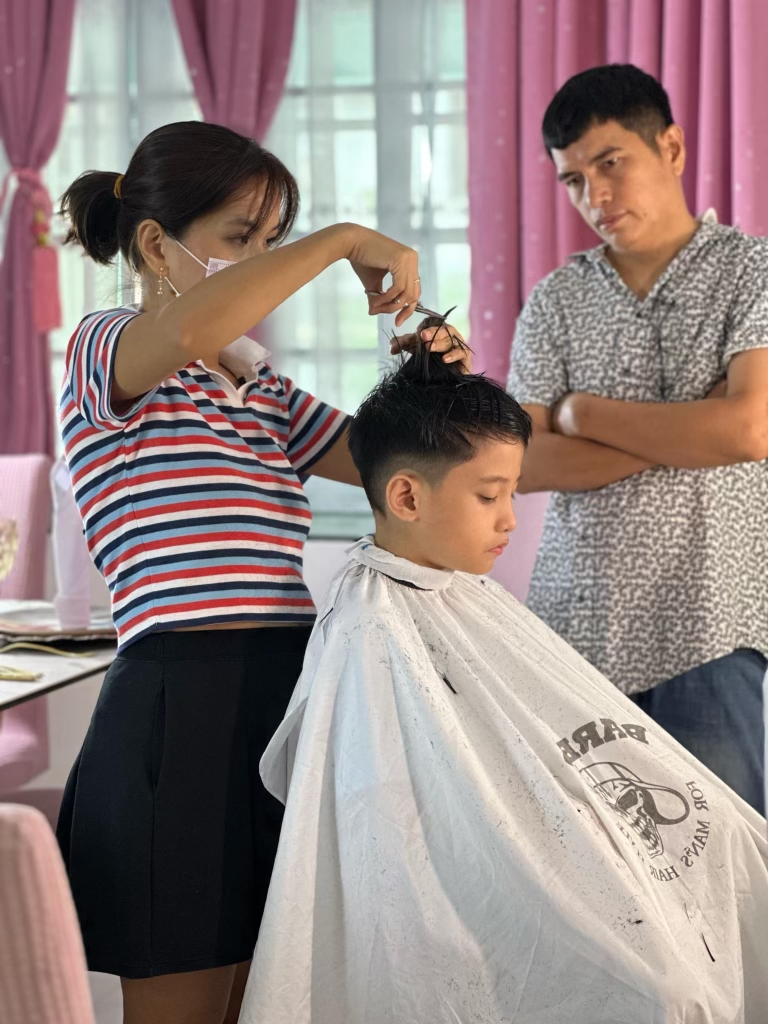
My son had a haircut. It did not went well. Pumipiglas siya the whole time. Julie was so bothered how it turned out that she considered hiring a barber to teach her how to cut men’s hair. The idea was that it would be better for our son since the haircut would be done at home, where he’d be more comfortable, and she could take as much time as needed.
And she did.
That’s the kind of wife I have.
This is just one example. She approaches everything with the same attitude. They say you tend to adopt some traits from your partner, and I can definitely say that her proactiveness is something I’ve picked up from her. It’s this same proactive mindset that has pushed me to where I am now in my career.
It’s always been in my head, but never put it into words: What we have, where we are can’t be attributed to me alone. It’s all because we’re together, both always giving.
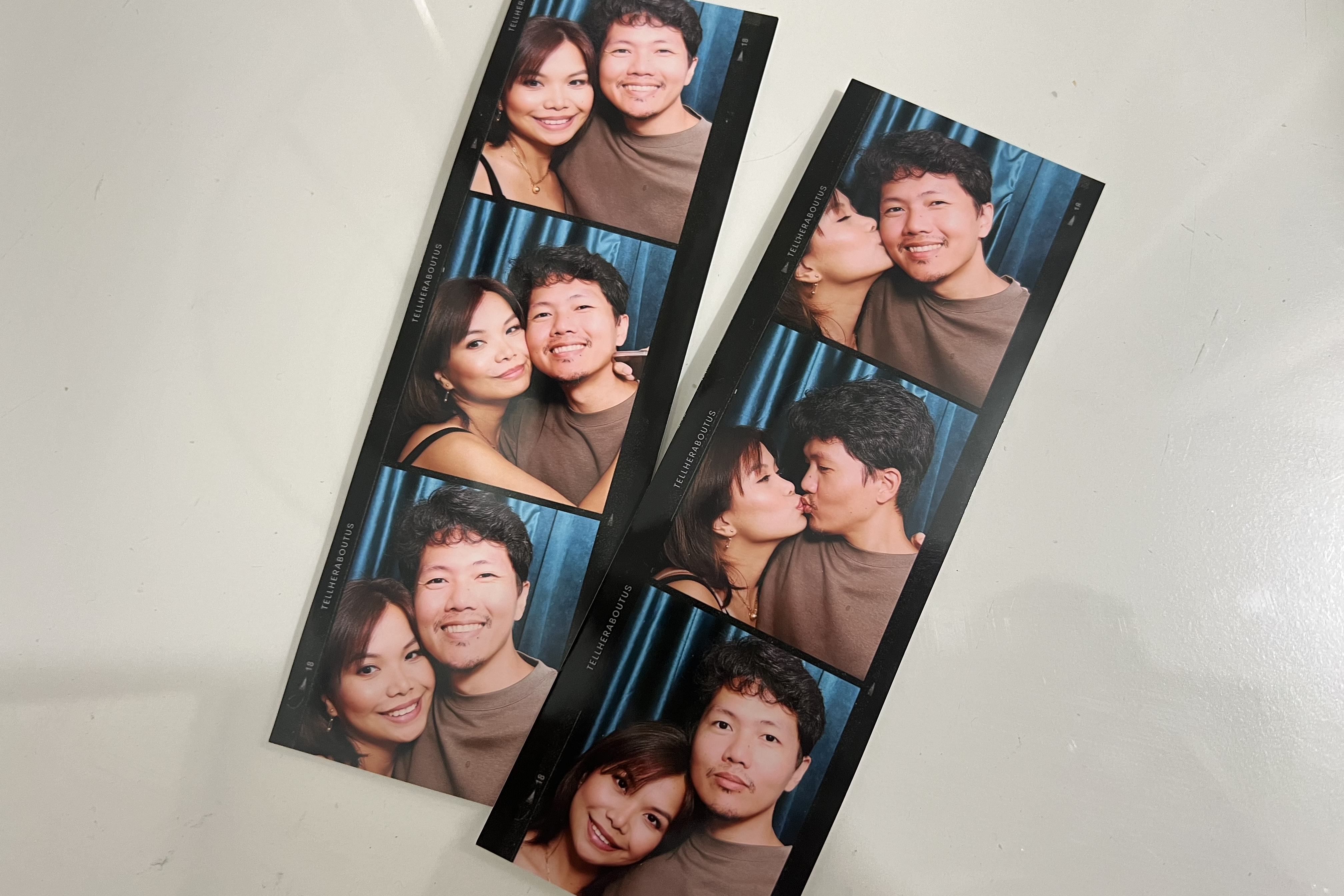
10 years together, 7 years married. All I can say is that it’s an honor to love you.
I have a thousand things I need and want to do. Before I could brute force doing as much as I can by compromising my sleep, but it does not work anymore (comes with old age). No good sleep means not a good day.
I have to manage my energy very carefully if I want to progress in anything, and not be trapped in reactionary day.
For the past couple of days, I’ve been re-assessing how I’m spending my time. It’s not easy to have slow mornings anymore. I’m always in a rush. I’ve been spending more time in my office than at home. I go home
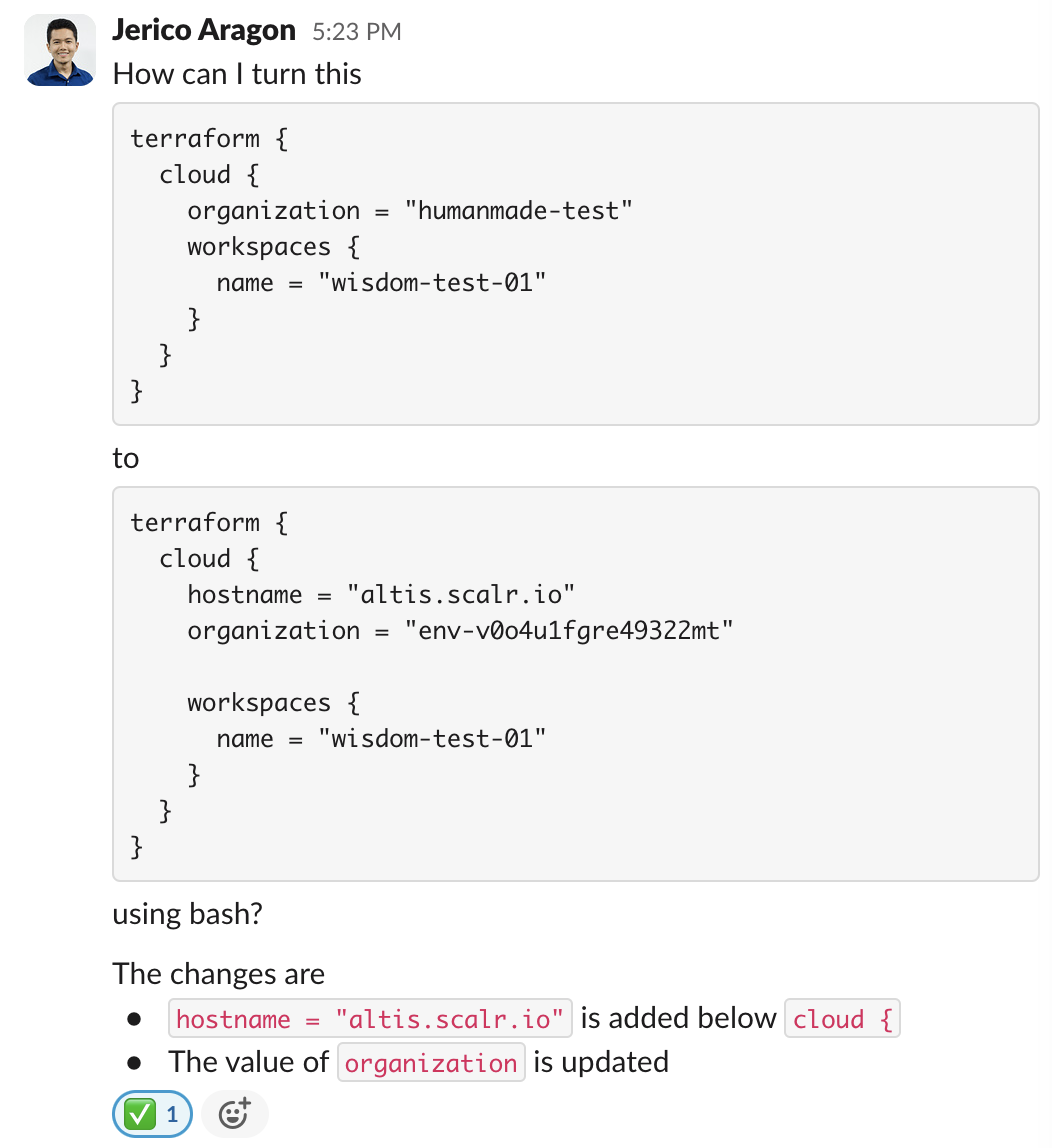
I’ve been working on a migration script for a couple of hours. I thought I’m done with the hard part of API calls, creating a new workspace, configuring the workspace to make it work.
The remaining task involves updating the configuration code itself to point to the new service provider. I didn’t anticipate spending hours on this since it’s a straightforward text manipulation. I expected this to be something I already knew how to do.
Previously, my approach was to exhaust all possible solutions on my own, often waiting until the last minute before asking. I don’t want to risk appearing like a fool.
Now, I’ve adopted a different approach. I ask for help proactively and provide updates on the steps I’m taking in the process. The team can respond if they knew the answer and if they got time.
It’s just a question! A single question could not possibly define my overall skill level.
The responses I got have been helpful, and I was able to complete my task.
I used to be sold to the idea of sharing economy. Uber, AirBnb, and not owning
things. It fits well with my minimalist lifestyle.
I distinctly remember trying my first Uber ride. At that moment, I thought
“Why would I need a car? A car that I have to maintain, and buy insurance for”.
I even considered limiting everything I own in a backpack, which would allow me
to move wherever I want, whenever I want.
Owning a car
Sure, owning a car is more expensive overall. But it buys me freedom. Uber is
convenient only to places where they operate, at the time when there’s a
demand. With a car, I have the flexibility to travel on my terms, have my own
private space. I don’t have to worry about whether I can book a ride to the
specific place I want to go at any given time.
Owning a place
“Most people, Kamala, are like a falling leaf, which is blown and is turning
around through the air, and wavers, and tumbles to the ground. But others, a
few, are like stars, they go on a fixed course, no wind reaches them, in
themselves they have their law and their course”
— Siddhartha
Sure, being able to move at whim seems nice. Having tried it though, I felt
lost. “What the hell am I doing? What am I trying to prove?” is what I remember
thinking when I was moving to my 4th hostel.
Having my own place allows me to establish roots. It gives me a home, a space
where I feel at ease and can be myself, doing things that suit me. Unlike
renting, where even something as simple as putting a nail in the wall requires
permission, ownership offers the freedom to make decisions about the space
without constraints.
Owning a decision
Ownership extends beyond material things, it includes decisions too. When I own
a decision, I take responsibility for the resulting outcome. Regardless if
it’s good or bad.
If in my mind it’s somebody else’s fault, how the hell can that help? Owning a
decision puts myself in a position where I can correct myself when I
acknowledge I made a bad move.
Ownership comes with higher costs — more money, more responsibility, more time
and effort. However, the sense of having more influence over the direction of
my life makes it worth it for me.
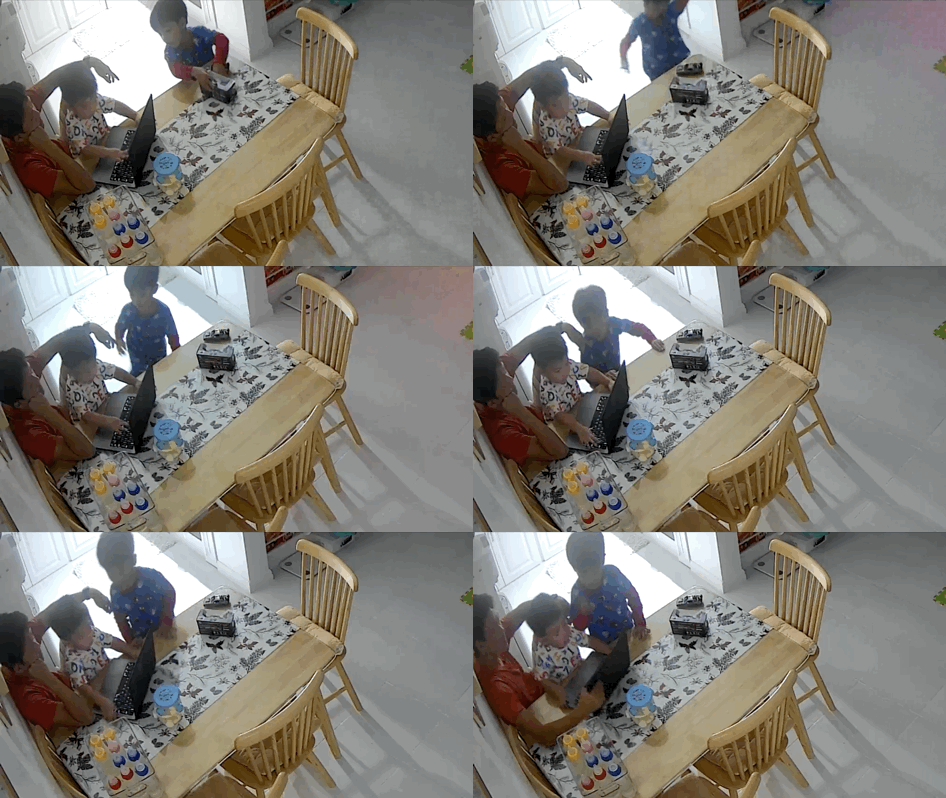
I used to think that I needed a separate workspace because working from home was challenging due to my kids. They would close my laptop, type on it, and constantly demand my attention, making it difficult to work.
While it’s partially true, I realized that it’s not the main reason.
My main reason for needing a separate workspace is rooted in my values that family comes first. Given the choice between working and attending to my kids, prioritizing my kids is a no-brainer. Whenever they are around, it’s tough choosing anything else because I know that it’s not forever that they’d want me around. I just got to enjoy it while they do.
I still have to work though. Being physically away from my kids allows me to do my job and be able to provide.
It’s a small nuance, but the end result is still the same — I have to be away working.
This is more on resolving an internal conflict when I have to work long hours. There are instances I question myself “Akala ko ba priority family? Ba’t puro ako trabaho?”. Now, I have a clear answer.
Ever since two of our kids started school at different schools with different schedules, I’ve been trying to figure out a way to still effectively work.
Here’s what I’m trying to follow:
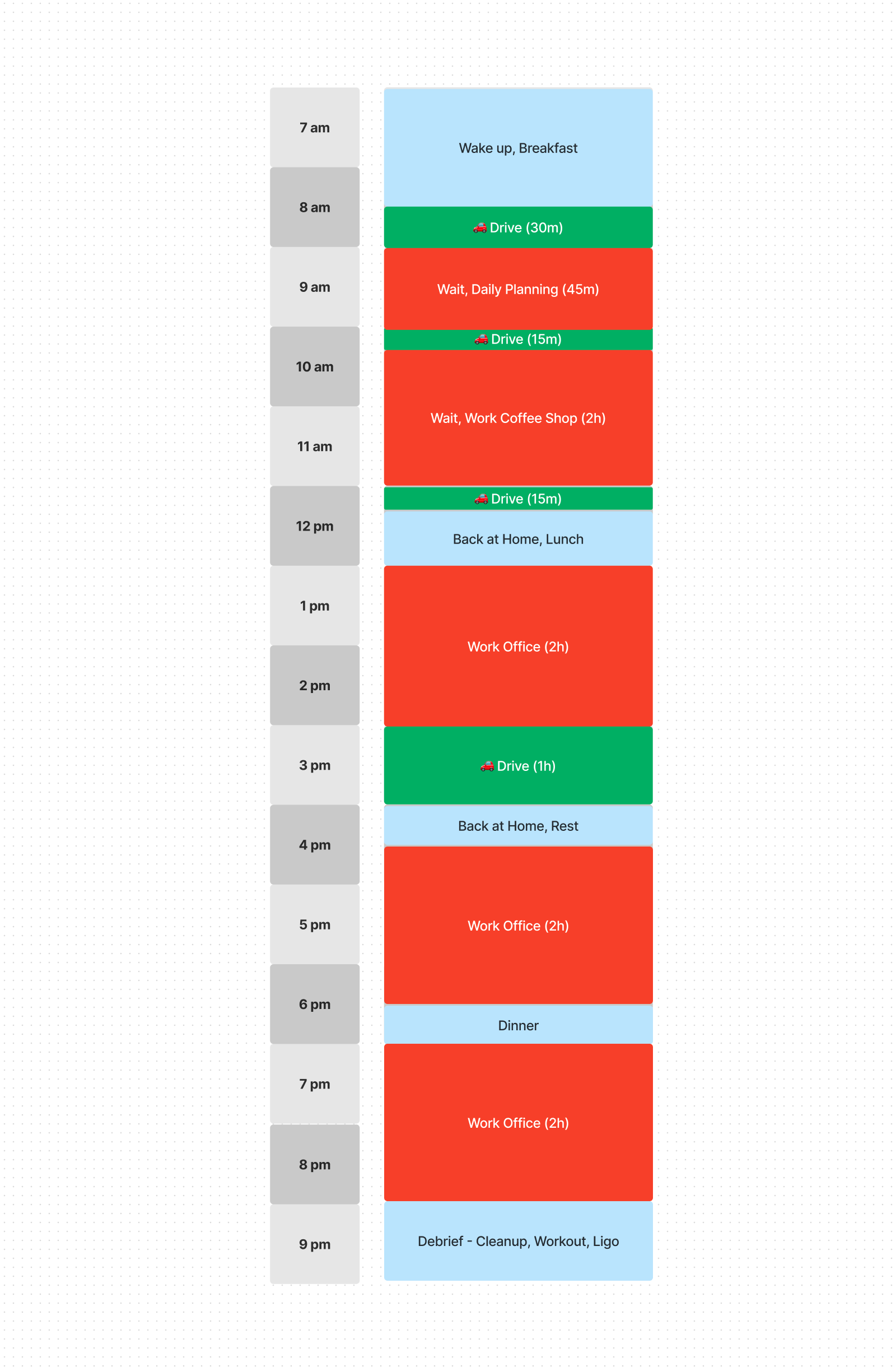
My goal is to have an 8-hour workday. I divide this to four 2-hour blocks.
Daily Planning
In daily planning, I try to be specific with what I want to accomplish on each block. Once that’s clear, I try to do tasks that takes less than 5-minute to do if I have the energy (most of the time I don’t and procrastinate 😛).
Operations Work
The initial 2-hour block mostly involves handling operational tasks for Human Made. During this period, I address change requests, support tickets, and emails. This works well because I’m usually the only person available around this hour. I can respond faster to our APAC customers.
It’s also good for me as it puts my head in to work mode.
Sprint Work / Meetings
In the following 2-hour blocks, the tasks are mixed bag. Sometimes more support work if there’s an active incident happening, sometimes I’m able to focus on sprint work.
Working in the evening enables me to participate in meetings with my team. This timing works well as those in the EMEA region are in their mid-day, and those in the Americas are just starting their day.
-
This schedule is not something I can consistently follow. Some days, completing even a single task is a struggle, while on other days, I effortlessly breeze through my to-do list. It’s a give-and-take scenario. When I’m struggling, I spend more time to work to still deliver, and during good periods, I spend more time at home. It’s a recurring cycle.
I think plans isn’t meant to be followed to the dot but rather to provide guidance and structure. Having things pre-decided makes it easy to get back on track when I feel lost.
I’ve been wanting to write and publish for a while, but I’ve been overly critical about what’s worth sharing or not.
I often consider things that, in hindsight, prove to be unnecessary, such as:
It has to provide value
I learned that sharing my personal experiences in itself have value. It brings up visibility on my interest that might resonate with other people too.
It has to be worth other’s people time
We’re clearly bad judges of our own creations. We should just put them out there and let the world decide. - Derek Sivers
I could not possibly know what’s worth other people’s time. It’s an imaginary audience in my head that put unnecessary pressure on me. Publish and let people decide.
It has to be structured, easy to read
At this point, it doesn’t matter how my posts are structured. The goal is be comfortable on publishing and sharing stuff. The goal is to keep on sharing. It could be a single sentence or a well-thought of piece. It doesn’t matter.
-
In general, writing does not have to be for other people. However, the thought that someone else might read it forces me to structure my writing enough that it makes sense. If I were writing solely for myself, I would write things that would not make sense even to me a few weeks, months, years from now.
Writing for other people is just an excuse to force myself to extract clarity out of what’s inside my head.
I’ve been wanting a 3D printer for years. The model I’m looking to purchase is around 10k.
While I technically have the means to afford it, it also means adding another “thing” in my life. There will be a mental burden to get the most out of it, and there will be guilt if I end up not using it as much.
Whenever I consider purchasing something for myself, there is always a lot to consider. I’m very frugal when it comes to things.
On the other hand, dining out with family or friends, particularly in larger groups, can easily reach the same cost. In those cases, I don’t even hesitate to cover the bill.
The key difference is I’m spending on people.
I feel like time spent together is always worth it, regardless of the cost.
This phrase encapsulates my general approach to spending: generous on people, frugal on things
There are other ways I try to be generous on people:
Always giving tip for any service, knowing that an unexpected extra income might help to the person that served me
Gifting things for people that has the potential to make their lives better
Appreciate people helpful to me and/or my family
Giving when opportunity of kindness presents itself
For more than a decade now, I’ve been using WordPress. Using is a keyword here. I’ve been using it without contributing back.
WordPress has reached 20 years this year, primarily due to the thousands of volunteers who contribute to its continuous development and maintenance, keeping it alive.
Looking back, it was working on WordPress-based projects that opened a lot of opportunities for me. The projects and jobs I got from it put me in a position where I could provide a comfortable life for my family.
I could say that if it weren’t for WordPress, I would not be where I am at now.
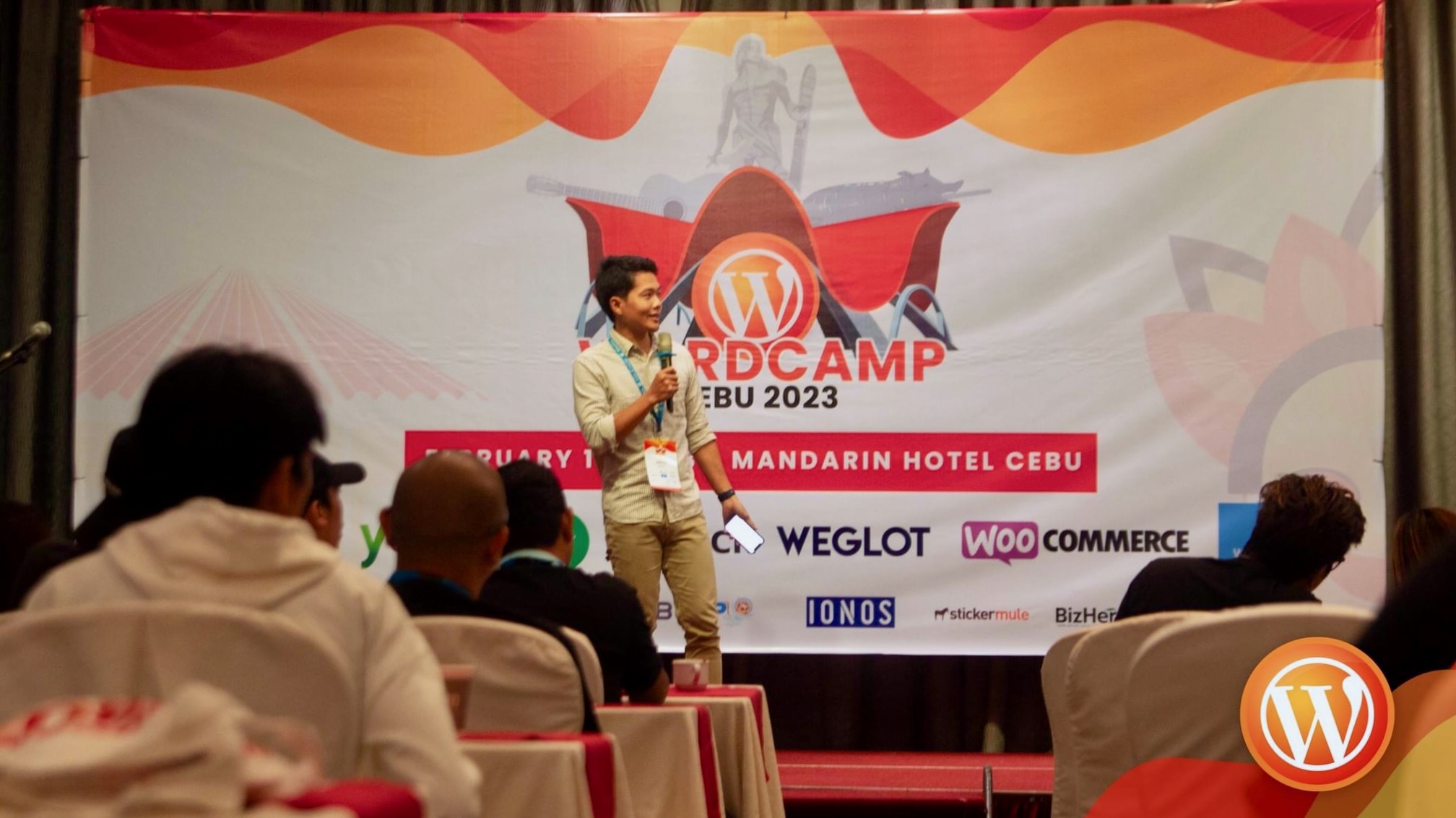
Applied as a speaker for WordCamp Cebu 2023
I had the intention to give back for a long time but I did not know where to start. When I saw that WordCamp Cebu was looking out for speakers, I applied.
My topic was not even about promoting myself, or any of my work or expertise. It was about how I personally use WordPress and why I think it’s the right choice for a CMS as it guarantees that you own and control what you produce.
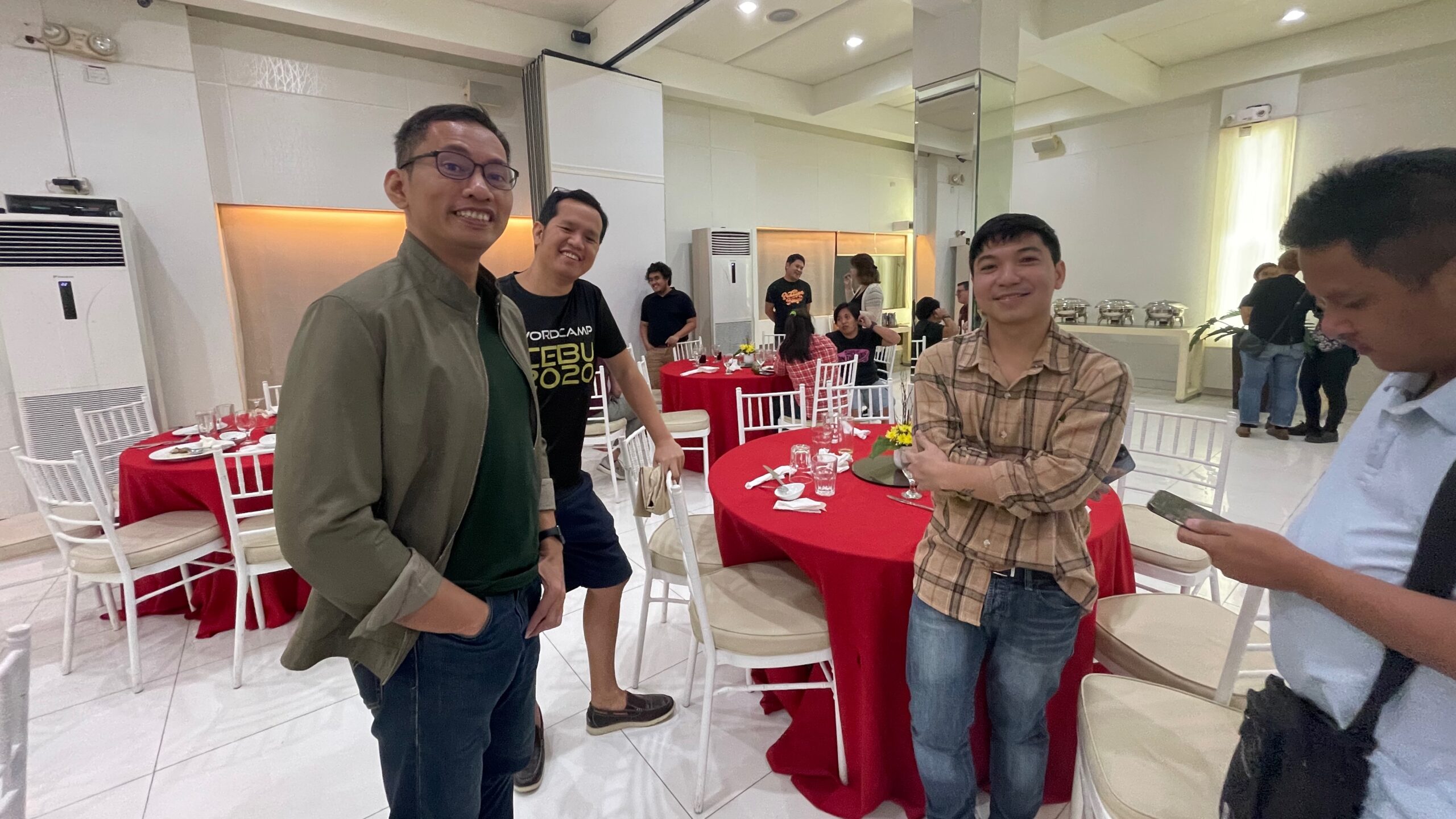
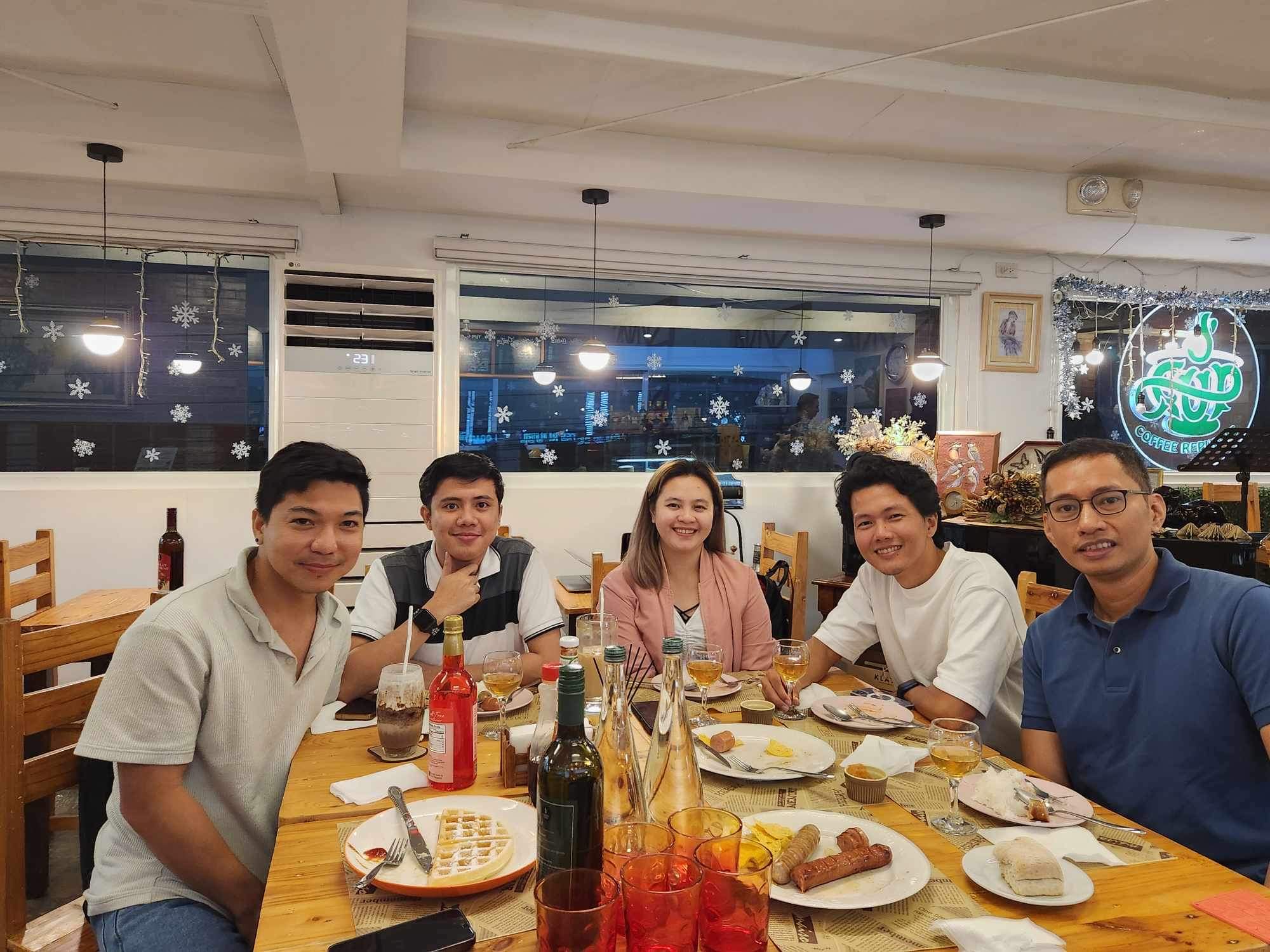
As a speaker, I had the chance to meet Drew, the lead organizer of WordCamp Manila, and Dreb, the lead organizer of WordCamp Davao, at the welcome dinner. It was super fun to hang out with them, an experience that becomes increasingly rare as I grow older. It felt like being around with my kind of people.
Attended WordCamp Asia 2023
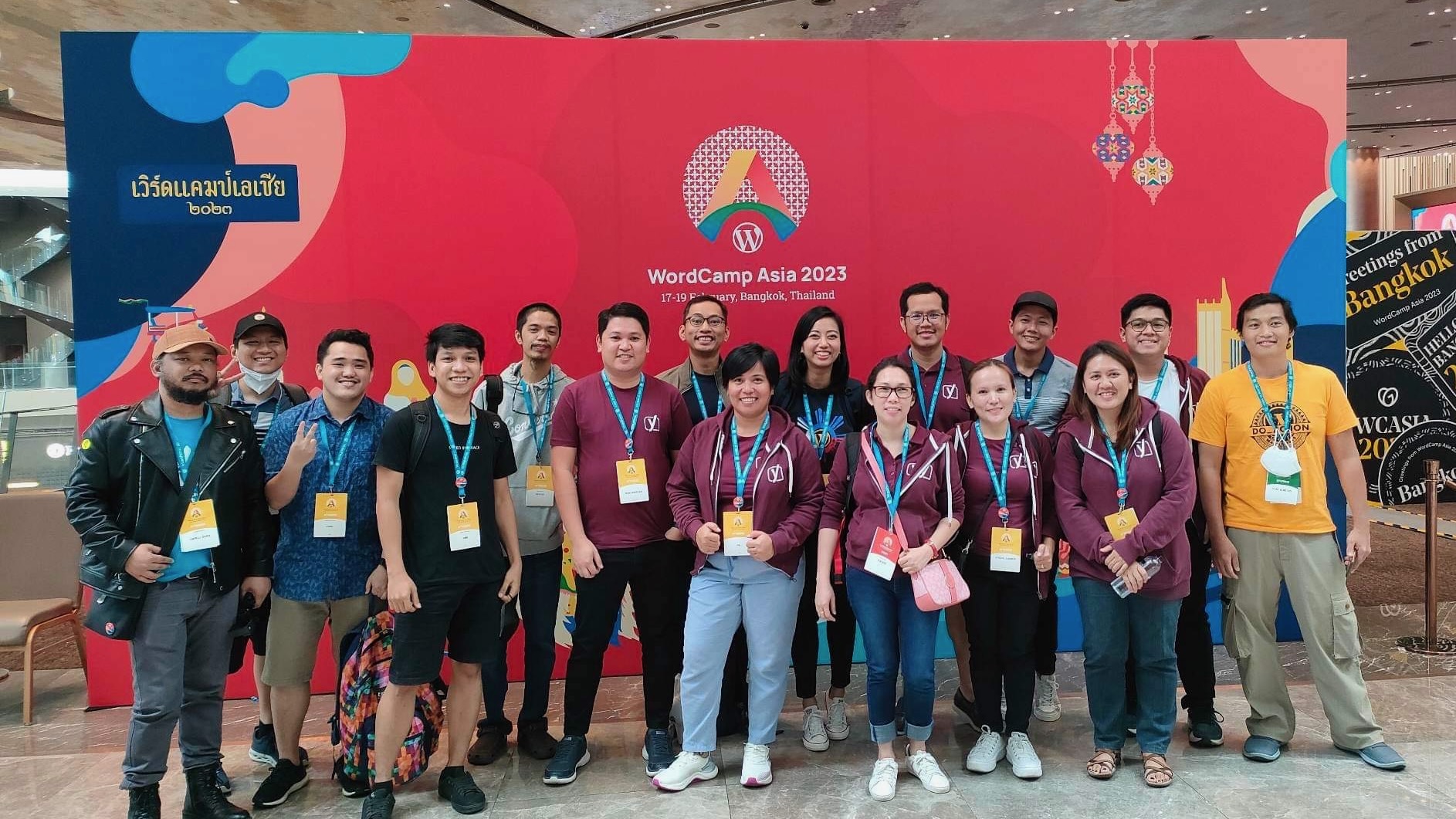
Pinoy delegates at WordCamp Asia 2023
The following month, WordCamp Asia took place. I connected with more people, and it was surprisingly easy to get along with them. It felt like WordCamps attract a certain kind of people who are open and inclusive by default.
The after parties were so enjoyable that the people I was with expressed a desire to bring that same fun back to our local community.
We started casually talking on organizing WordCamp Manila. No concrete plans yet, but it planted a seed with everybody about making it happen.
Helped organize WordCamp Manila 2023
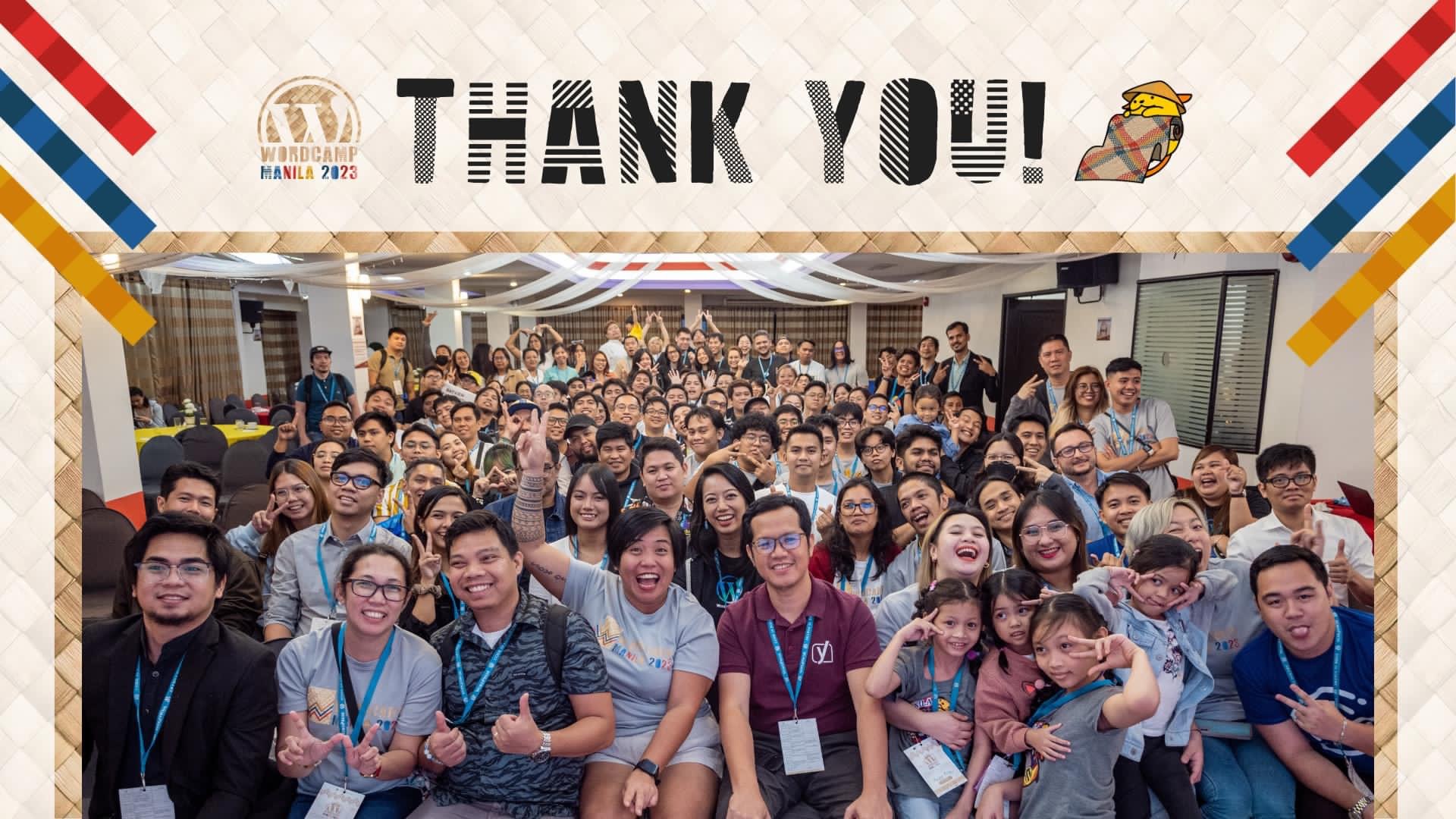
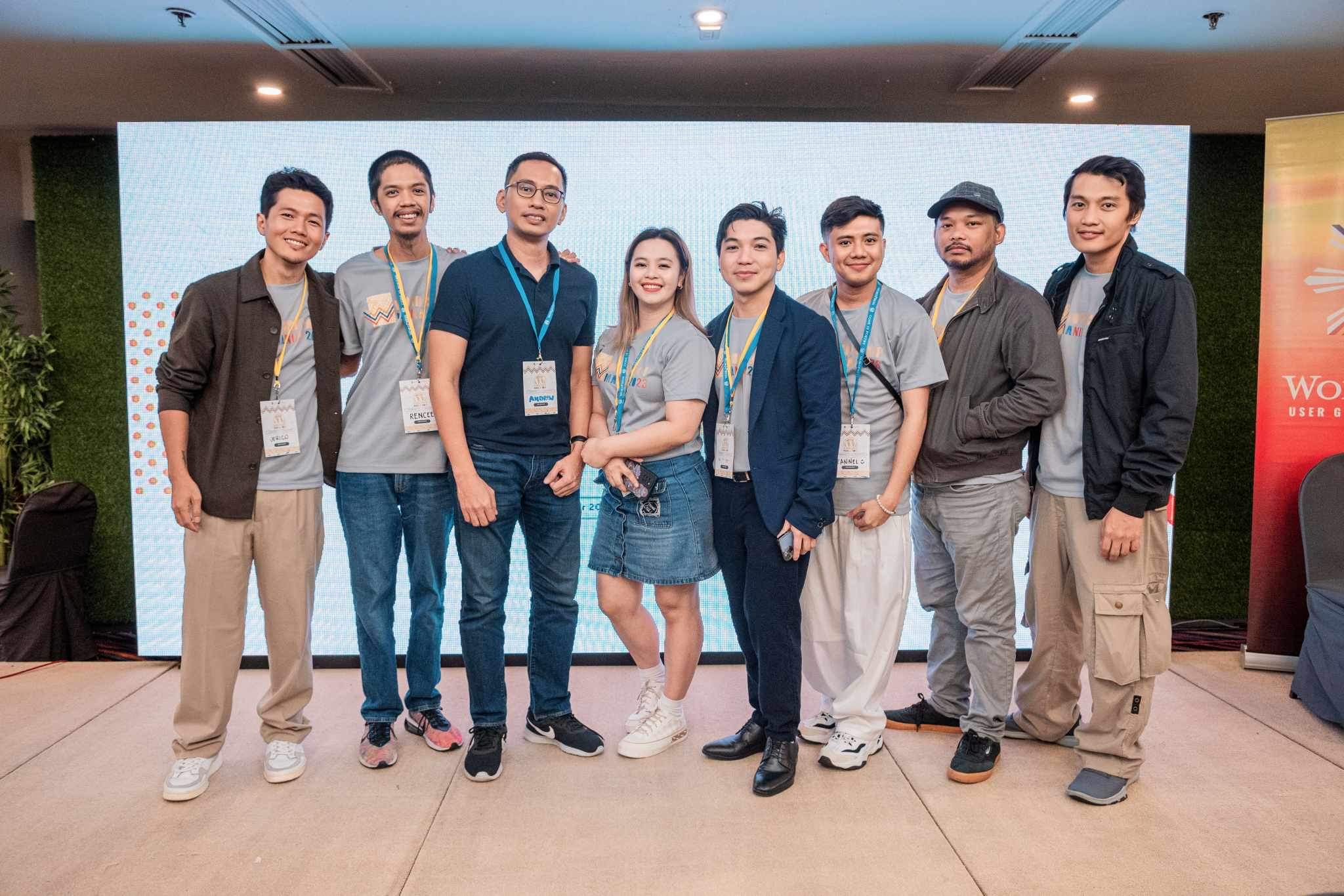
WordCamp Manila 2023 Organizing Team
After coming back home, I started getting more involved with the local community. I did another talk in a meetup, I volunteered, and I was always present in-person and in our weekly calls.
It’s just amazing how one thing always lead to another.
Getting involved made me realize that community work is a key factor in sustaining WordPress’ longevity. With organizing a WordCamp event, even if we inspire just a single person to contribute back, it will help WordPress. And I’m hoping that we did.
What’s next?
I work with very talented people who’s an active contributor to WordPress. I’d like to explore more ways to contribute back, especially to Core and Hosting, which is directly tied to my work at Human Made.
No concrete plans yet, but let’s see what happens.
#
I did all this with the pure intention to contribute back, not expecting anything in return. I felt like it’s time for me to give back. However, I still ended up gaining more than I gave – new friends.
I first learned about this word when I attended Vipassana back in 2016.
I don’t only remember it, but it’s ingrained in my head because it’s the word that’s used to break the hours-long meditation sessions that happen a couple times a day for 10 days. I began to yearn for it, especially when back pain becomes unbearable from sitting up straight, or there’s a mosquito right on my nose sucking out my blood, and we’re instructed to just observe. Observe our breathing. See how everything comes and goes.
Anicca means impermanence.
The word resonated with me so much I had it tattooed on my right forearm. When I learned that it is transliterated as “anicca” from Pali, I knew it’s going to be the name of our baby girl.
And here she is.
-
Nothing in life is permanent. Being aware and accepting this fact will only help us prepare, and face the things that will come and go.
It’s a belief that makes me balanced. It’s a belief I want to introduce to my kids and see if it’s going to resonate with them too.
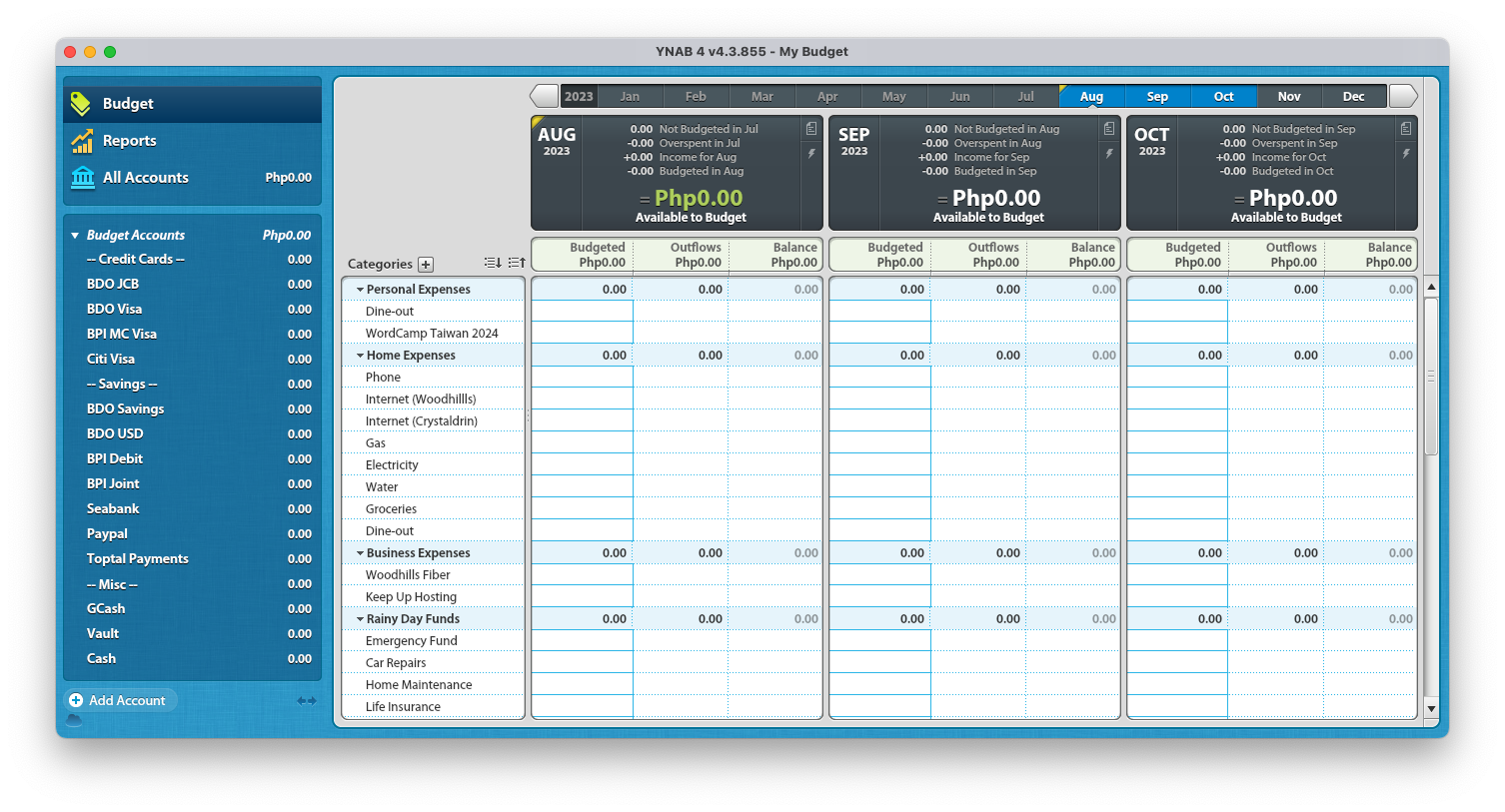
I haven’t done budgeting since November 2022 (9 months!). Mainly because I’m
out of track.
Before getting out of track, I’ve been consistently doing it for the past 5
years.
I’ve attempted twice to get my budget in order, but the backlog is just too
much. There’s a lot to account for, there’s a lot to tally. After spending
several hours hours backtracking, I gave up.
Fresh start
YNAB has this
concept of not caring about past expenses. There’s nothing you can do with
money already spent.
Even though it’s good to have 5 years worth of data, it’s only a nice-to-have.
If I continue to operate without a budget, I’m risking myself to be in a
position where I anxiously wait when my next paycheck will be. Kahig-tuka ba.
Another side-effect is it’s also getting incredibly difficult to make big
financial decisions without knowing where I stand financially.
I decided to let go and do a fresh start.
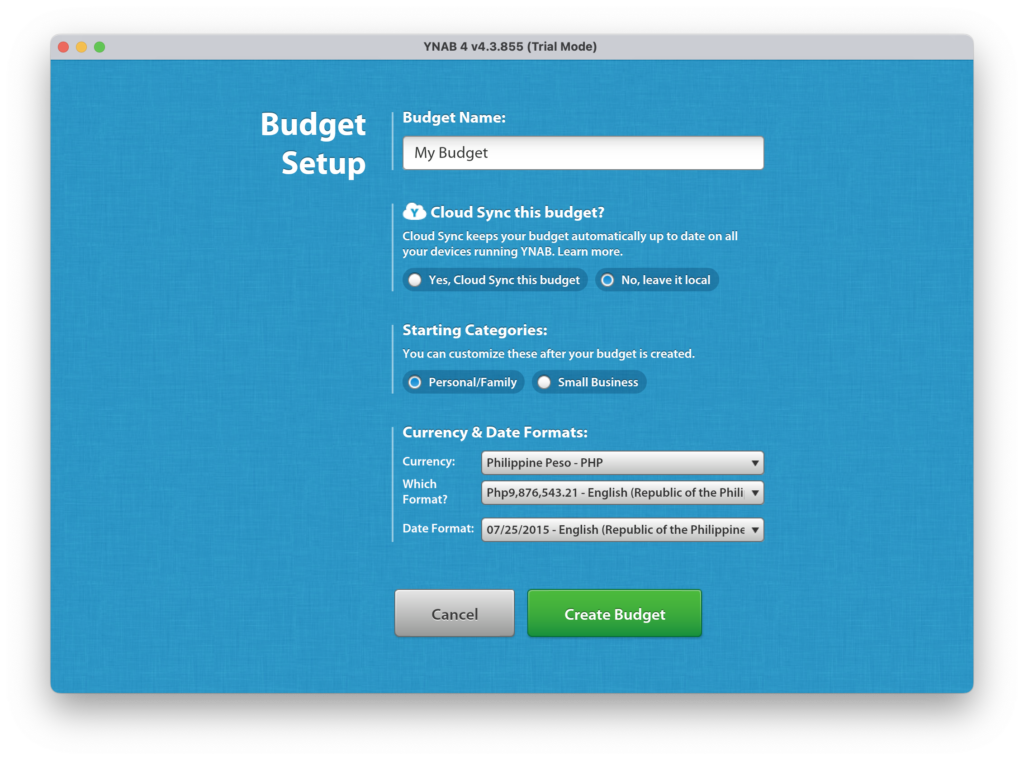
Switching back to Classic YNAB
Since I’m going to start fresh, it’s a perfect time to switch back to Classic
YNAB.
I love YNAB methodology. It fits my thinking. It helped me manage my money when
I started earning.
Over the years, the company behind YNAB changed and they pivoted the product to
one-time purchase to a monthly subscription. I had no problem with it,
especially with a grandfather’ed pricing where I got a discounted monthly fee.
I’m happy to pay because it literally changed how I think about money.
A couple of years more, they increased the price twice. It felt like they lock
you down with their methods, and leave you no choice but to accept their
pricing change.
It’s been on my list to move out of YNAB. I was looking for something that I
can use in my lifetime. I tried Firefly III (an
open-source alternative but with different methodology),
GnuCash (another open-source alternative), but the
YNAB method is already ingrained in me.
Luckily, I’m not alone feeling this way. The community made the classic YNAB 4
work on a modern OS.
Knowing for a fact that it will not change (it hasn’t been updated since 2019)
gives me confidence it will still work for the foreseeable future. I can build
my budgeting process without getting affected on any change of direction of the
company behind it.
Y64
Y64 provides a bash script that will
download the latest YNAB 4 and the latest Adobe AIR 64-bit runtime and compile
it to a working app. Running the script will output a working YNAB 4 app.
The app itself aged like a fine wine. It’s still perfectly usable and does not
feel old.
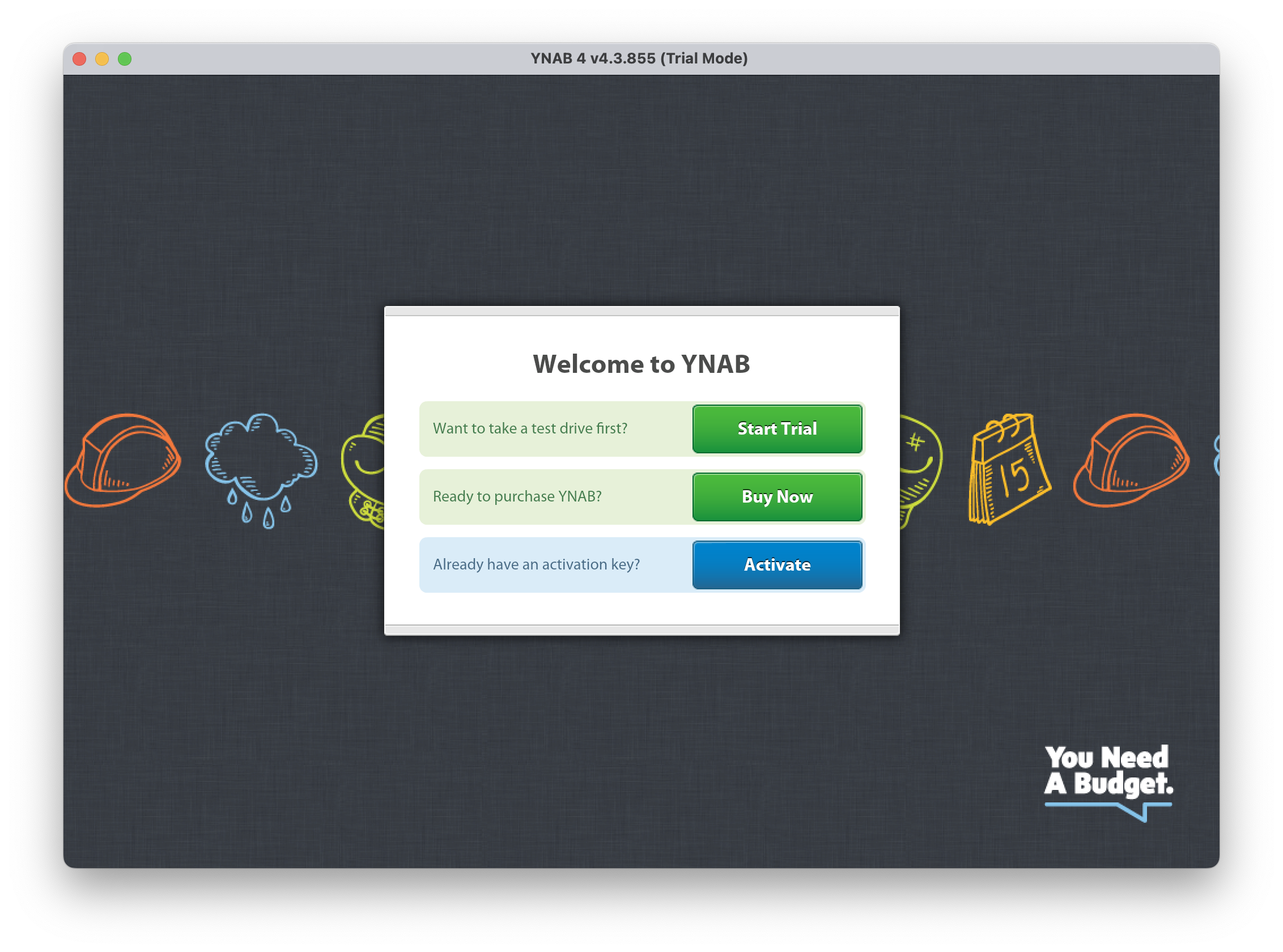
License
YNAB does not sell license anymore for the classic YNAB. Since it’s already
unsupported, the way to workaround this is to adjust the trial mode end-date by
editing the license file.
I’m actually writing this on Jan 2nd already, but family stuff happened and I’m okay to back-post to fulfill my new year’s resolution which is to publish everyday.
Publish everyday, no matter how insignificant my update is. Why? I feel like I’ve been keeping too much stuff inside my head. Stuff not written down only fills in my limited head space. Once I write it down, I’m free to let go of it. Or look back with what I published when I feel like I need to.
Bad start, but it’s okay
Here’s to a bad start of posting late in the first day of the year. But forgiving myself and still doing it anyway.
For a couple of months now, my days are mostly filled work and family time. I feel guilty with the amount of time I’m spending at work. What I do is every time not spent working is spent on family.
No time to slow down, let alone to stop.
This has been detrimental to me on multiple aspects.
Mentally
With my days filled, there’s minimal wiggle room for exploration and mistakes. This puts unnecessary pressure to myself. With pressure, I don’t operate optimally. Even the simplest tasks take a long time to get started and push to completion.
Emotionally
Even if I’m physically with my family, I cannot be fully present. At the back of my mind, there’s this anxiety of things I need to do.
Not being fully present makes me feel more guilty.
Failing to deliver things on expectations I set hits my self-esteem. A lower self-esteem results to failing to deliver more.
It’s a downward spiral that takes a lot of self-awareness and willpower to get out of.
Physically
With feeling limited of time, exercise was one of the first thing that went away. Without exercise and pushing myself hard, I felt weaker and unprepared for day-to-day challenges. I easily get ticked-off, I easily give-in.
It’s counterintuitive to slow down when I have a lot of things on my plate. But it’s exactly what I need when my days are filled.
If your brain is a highway and you are filling yourself with work, after a while you start to slow down. Your mental rush hour gets longer and longer. You find yourself struggling to accomplish even the simplest tasks.
Today, I took time to stop and reflect where I’m at.
One of the first steps to get out of this rabbit hole of always pressured, always in a rush, and failing to manage expectations.
While doing a weekly review earlier today, I realized most of the stuff in my plans are for other people. I don’t have a day where I get to do things I’m naturally drawn to do. I fill all my days with things I have to do — which I actually don’t have an issue with, but leaves me unfulfilled.
Maybe this is also why when I share that I’m planning to try something new, I get a laugh instead of support. I can’t blame them. My want-to-dos only has been increasing. I should explicitly make time for it.
I’ll try this: I won’t plan work stuff on my Saturdays. I added a note in my weekly planner and calendar to remind me to do things for myself.
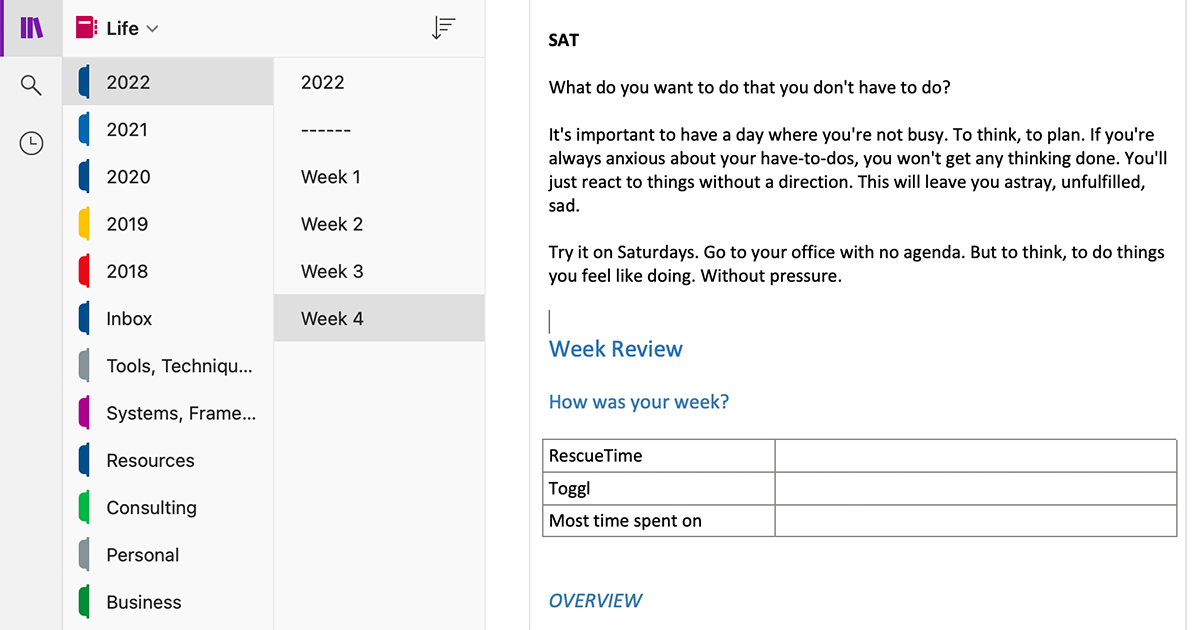
What do you want to do that you don’t have to do?
It’s important to have a day where you’re not busy. To think, to plan. If you’re always anxious about your have-to-dos, you won’t get any thinking done. You’ll just react to things without a direction. This will leave you astray, unfulfilled, sad.
Try it on Saturdays. Go to your office with no agenda. But to think, to do things you feel like doing. Without pressure.
“Can you remember who you were, before the world told you who you should be.” - Charles Bukowski
For this year, I’m explicitly deciding to put myself first.
#
Self-care
I can’t expect other people to take care of me. It’s a nice-to-have, but I shouldn’t really rely on it. Other people already have their own set of priorities and problems, I can’t reasonably expect another person to put me first.
To change: Prepare and have the capacity to take care of myself
Be a less agreeable person
It’s easy for me to empathize with anyone. This leads me to being an overly agreeable person. By default, I put other’s people needs over my own. It’s genuine, but I’m at a point that I feel it’s a disservice to myself. I’m here to lead a good life, to be an example to my 3 sons. I’m not here to please.
To change: Put my needs first. Less empathy, more enforcing of boundaries. Embrace tension, conflicts, and disagreements. Don’t tolerate any form of disrespect. People may cut me off, and that’s okay.
Indulging myself
Spending for other people is infinitely easier for me than spending for myself. I’m thinking it might be a symptom that deep down I feel I don’t deserve to have nice things. I don’t particularly like the word “deserve” because it reeks entitlement , but in this case I think I deserve it.
To change: As long as I fulfill my duties and roles, I’m allowing myself to indulge guilt-free to things I need, want, and prefer.
#
Everything here sounds too selfish to me, but I have to remind myself: The better I take care of myself, the better I will handle life, the better it will be for people around me.
“Way too often we bring the best of ourselves to work and the leftovers home.” - Esther Perel
This has been a slap in my face when I realized it’s true. I’ve been putting all my prime energy at work — the fun, energetic, solve-all-your-problems attitude version of myself. I go home tired, irritated, no energy left for my family. My thought is it was justified since my main role was providing, and I’m doing it fairly well. But turns out it doesn’t align with my values.
Strong values makes easy decisions
What I do now is have “slow mornings”. I do not go to work until my kids wake up, have breakfast, and I spent time with them (with as little gadget use as possible). I also make sure I’m around when it’s bed time, regardless of deadlines and deliverables. Those can wait until my kids are asleep.
One of my core value that I identified is family comes before work. I couldn’t count how many times I ditched work to spend fun times with my kids now. Ditching work is easy if the question is should I have fun with my kids or be guilt-ridden procrastinating while I try to work? Of course my default answer is have fun with my kids. My prime energy is for my family.
What’s my work structure looks like now?
The only time I’m guilt-free working is when they are sleeping. However, working only when they are sleeping isn’t sustainable. I still need to work. After all, providing is still my primary role.
My kids wake up at 6-7am, then I stick around to spend time with them up to 10am. I officially start my work day by then. I try to go home for lunch, late afternoon walk, and dinner, then go back to my office until bed time at 9pm. This is a hard stop of my work hours. It’s very important for me to be there at bed time. Usually, if I still need to deliver something within the day, I’d just set an alarm at 11pm to wake up and continue working.
I preferably not want to work beyond 3am because I wouldn’t have good energy when my kids wake up. If I’m still not done by that time, I’d reset expectations.
Where do I compromise?
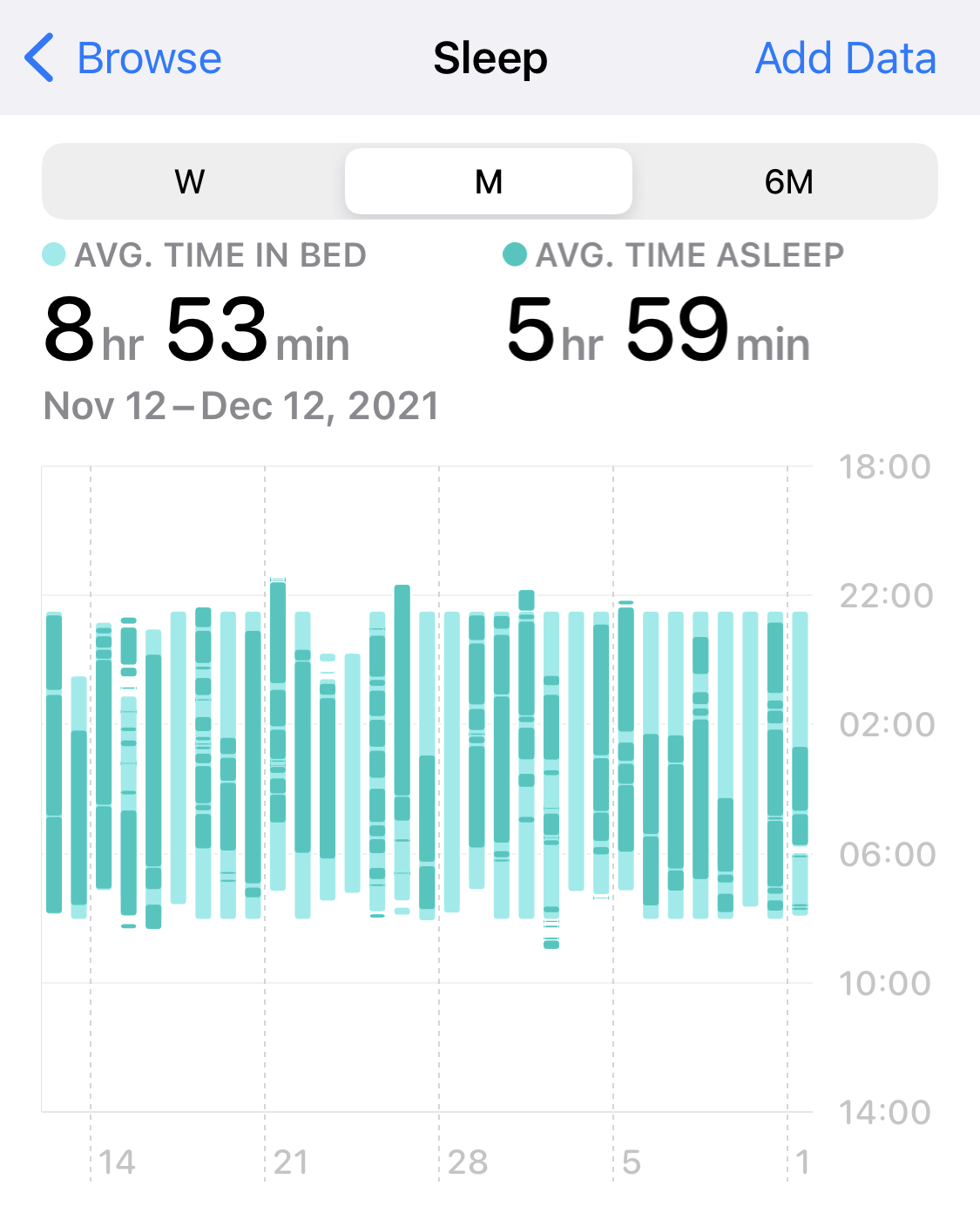
I want to be good with family and work. My work enables us live a good life. So where do I compromise? Sleep. Year-over-year I’ve been needing less sleep. I’m at 6 hours/night now. This is why I have more coffee in my blood than water. 😛
There’s a 2 hour gap between my average time in bed and average time asleep because my kids usually takes sometime to sleep. We ask about their day, pray, and say thanks for everything we’re grateful for (usually for new toys). It’s extra fun when they start talking.
Why am I doing this?
Kids belong to themselves. The process of them leaving you starts when they leave your body. - Marriage Story
Well, in my case it started when they left my wife’s body. I can imagine it’s a long steady process of them leaving slowly until they are capable on their own.
“They grow up fast, spend time with them while you can.” is a recurring theme when I read about parenting stuff. This is why I try to spend as much time with them as I can. Soon enough they wouldn’t even want to hang out with me anymore (and that’s okay).
I’ve accepted that the next 10-20 years of my life will be mostly about supporting them. Things I selfishly want to do, I can do later on if I’m still given the time. All the time spent with them is well worth it on it’s own anyway.
Ultimately, it’s a meaningful experience to witness a human being that was part of myself grow to be their own self. And I just want to witness as much as I can.
I used to see insecurity as a sign of weakness, something I should dispose. Lately though, I’ve been thinking about usefulness of negative emotions. Those must have serve for something since we still feel it despite generations of evolution, right?
Growth is one thing. We can’t grow stronger if we always feel good. If we feel secure all the time, we’d be complacent. There’s no incentive to change things. Insecurity is like a fever, it’s a symptom that something is wrong. I feel insecure because my body wants to tell me something. I think it works as a “signal” that I have something to improve on.
Try to understand: what is my body trying to telling me?
Do I need to improve my understanding of the world? Do I need to improve a particular skill? Do I need to prepare myself for something?
What actionable step can I take now?
I’ll try to figure out why, be completely honest with myself, and address it. It hits hard, but it also pushes me forward. The more issues I can resolve, the more confident I will be dealing with any issues that will come up, the more secure I become.
When I get insecure now, instead of brushing it out, I ask 1) What is this telling me? 2) What actionable step can I do? And then do it.
I recently got a new a job as a Cloud Engineer. Part of pre-onboarding was choosing my preferred equipment. The recommended machine for engineering roles was a MacBook Pro 13” 16gb 512gb with an AirPods Pro (or any equivalent). Since Intel-based MacBooks are getting phased-out, I opted for a MacBook Pro 14”.
Here’s where my issue surfaced. Even though I’m not the one paying for it, it still felt excessive. I already have a personal MacBook Air that’s half the cost and also good enough to do my role. My role requires ridiculously low computing power to be productive. When I got it, I wasn’t giddy or super excited as I should be. I felt some kind-of waste on adding another stuff to my life, when I already have something I can use. It literally sat on my desk for a full week before I started using it.
I wondered why:
I like getting away with as minimum as I can - I think the optimal position to be in is just right in the middle. Not lacking, but also nothing in excess.
Cheaper stuff requires less care and easy to replace - I get more excited with cheap electronics than most expensive ones. I like not having the best. Easily replaceable.
Less emotional attachment to material things - If it breaks (which it will inevitably will), then it breaks. No hard feelings. I’ll just buy a new one. A line in Fight Club stuck with me when I start to feel I’m too invested in a particular thing: the things you own end up owning you.
This all made sense. But at the same time, I’m also wondering: Am I just rationalizing? Is it probably because I feel I don’t deserve the best?
One thing that significantly changed in me when I had kids is the willingness to build wealth.
My family is never really about luxury. We’ve never really envied other people who has more than us. My upbringing is heavily biased on being contented with what we have (thanks Ma!). There’s natural resistance to excess. And that’s how I am up to now.
Bringing kids to this world though, have this good burden of wanting to provide and secure them the basic necessities of life. That’s how I see my primary role now: a provider. However, there’s really no guarantee up until when I’ll be alive. The best option I have is to build wealth as fast as possible that can cover their life up until they are capable of choosing their own path.
At the core of what I do and why I’m motivated to work hard is actually a disguise on being ready to die anytime.
How I’m preparing to die
The best way I effectively work is when I have a crystal clear vision of what I want to achieve. I’ve identified two goals that, when achieved, I can go peacefully:
House and lot per kid - with a lot of luck, I was able to achieve this recently. Whatever happens now, at the very least they will have a place to live in.
5m per kid - to cover basic necessities and education up to college - this will take some time to achieve. My strategy for this one is get to a term-life insurance until I get to this point. Regardless of what happened to me, they will still be covered.
Of course I want to provide them more than material things. I’m figuring those out along the way. I just consider this as the baseline of what I’m aiming to provide.
#
There’s this line in one of my favorite song when I contemplate about death: love is watching someone die — so who’s gonna watch you die?
I sure hope that my kids are the ones who’ll be there. Already equipped for whichever path they choose and ready to whatever challenge the world is going to throw at them.
Whenever I’m in a tough situation, it has become my habit to ask “what’s the worst thing that can happen?”
Let’s say I got delayed on a project. What’s the worst that can happen? I get fired. Then what? I will still be alive by then, I could find another job. I also know that I’ve minimized my risks enough that I could live the same lifestyle for a few months without any income. There isn’t really something to be anxious about.
I read that the fear we feel didn’t evolve as human’s circumstances improved. The fear we feel getting fired is irrationally similar to being in a life-and-death situation.
Fear’s primary purpose is to keep us from things that threatens our lives. If it’s something that can cause irreversible consequences (total disability, jail, death), sure it makes sense to be afraid. But if it’s not, fear just becomes a hindrance to think of solutions. So how do I lessen it?
Acknowledge the worst outcome
Explicitly acknowledging what’s the worst that can happen makes myself realize that hey I ain’t gonna die. I can move on to thinking how I can actually rectify my situation. A significant amount of mistakes can be corrected.
For a delayed project, most people just want to be updated. Sharing what’s the cause of the delay and how I plan to stay on track is a very good first step to do.
I don’t have control on how they will react. But regardless if they understood my situation or the worst actually happened, I’m prepared. The important thing is I was not paralyzed by fear, I started moving again.
I maintain and add/fix features to an eight-year-old codebase (web app). I like maintaining and keeping things running. My main challenge here is every time a new feature has to be implemented/fixed, I have a long list to do before I get to the actual work. Regardless on how simple it is.
To get started I need to:
Open Visual Studio project
Make sure I’m working on the latest version
Start RavenDB (local database server)
Start RabbitMQ (local message-broker)
Start IIS (local web server)
Open JIRA ticket for implementation details
Finally, start working on the feature
This is only to get started. It doesn’t cover doing the actual work, testing, and deployment. There’s too much friction.
What I tried but didn’t fully resolved my issue
My initial solution was to use a dedicated laptop for web app-related work. This worked for a while but I didn’t like maintaining two laptops. If I forgot to charge the laptop, it shuts off leaving me to do those same thing all over again.
The second thing I tried was to run VM in Azure for development work. It has an image with Visual Studio pre-installed. I was able to ship a few features using this workflow. The lag was noticeable but every time I logged in, I resume where I left off. My issue is the cheapest VM costs around $20 a month (2 vCPU, 2gb ram, non-ssd storage). Build time is also considerably longer because of the specs, which becomes critical for hot fixes.
What I found to be working for me
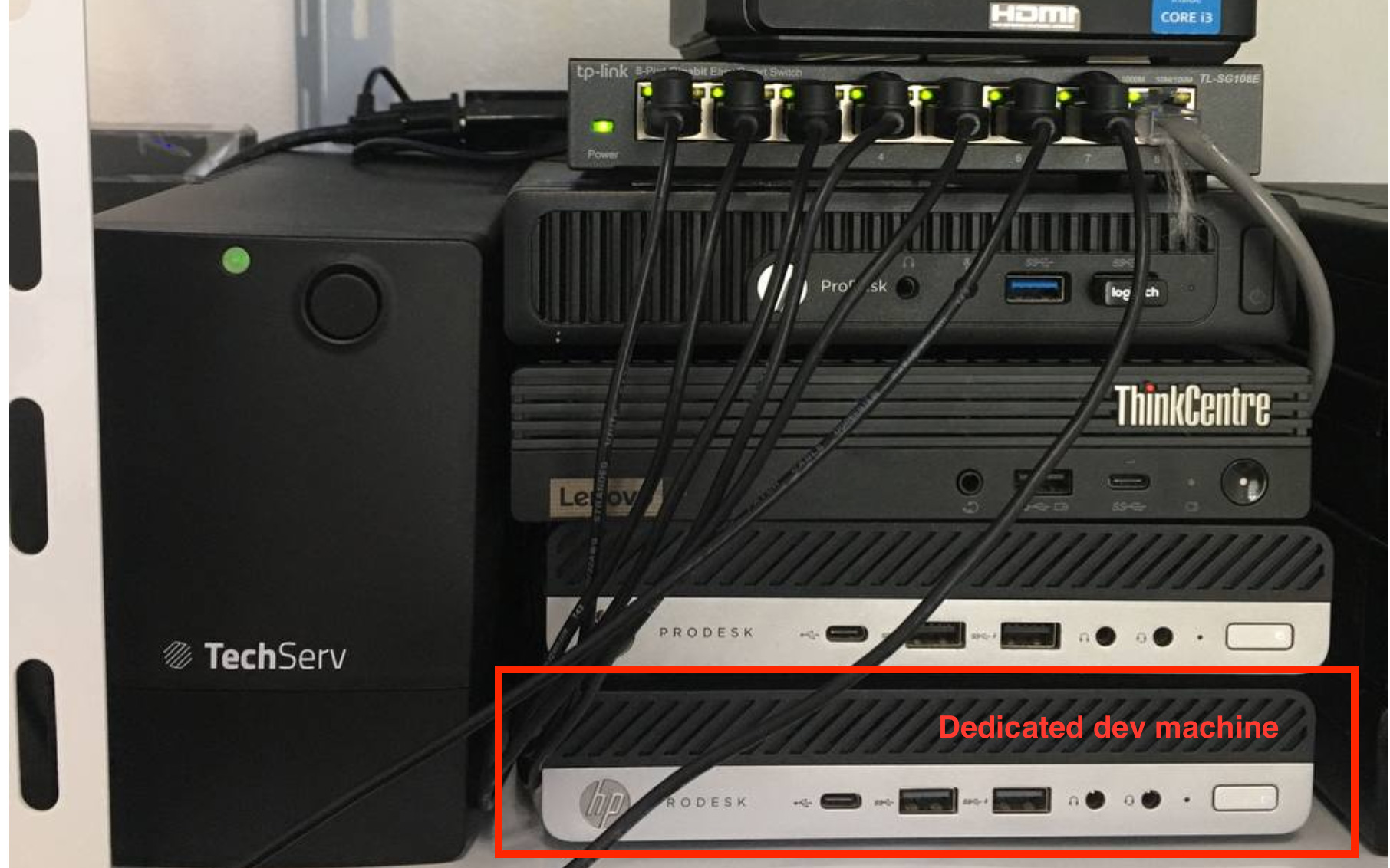
I discovered cheap tiny PCs in FB Marketplace. Cost is only P10k for a fairly recent Intel i5 9th gen processor (6 cores). It idles at 10 watts (a full pc idles at 100w). I added 2x 16gb DDR4 ram and 1TB SSD. Total cost is only around 20k.
It sits in my lil homelab together with my other servers
I’m using it as an always-on headless machine that I access through Jump Desktop. Jump Desktop is a remote desktop app that has its own STUN servers. This means I can access the machine anywhere as long as there’s internet.
This solved my main pain point when working on this particular codebase. I’m also back on bringing only a single laptop with me if I go out.
My new process now:
Open Jump Desktop
Connect to the development machine
Since everything is in place already, I only need to start working
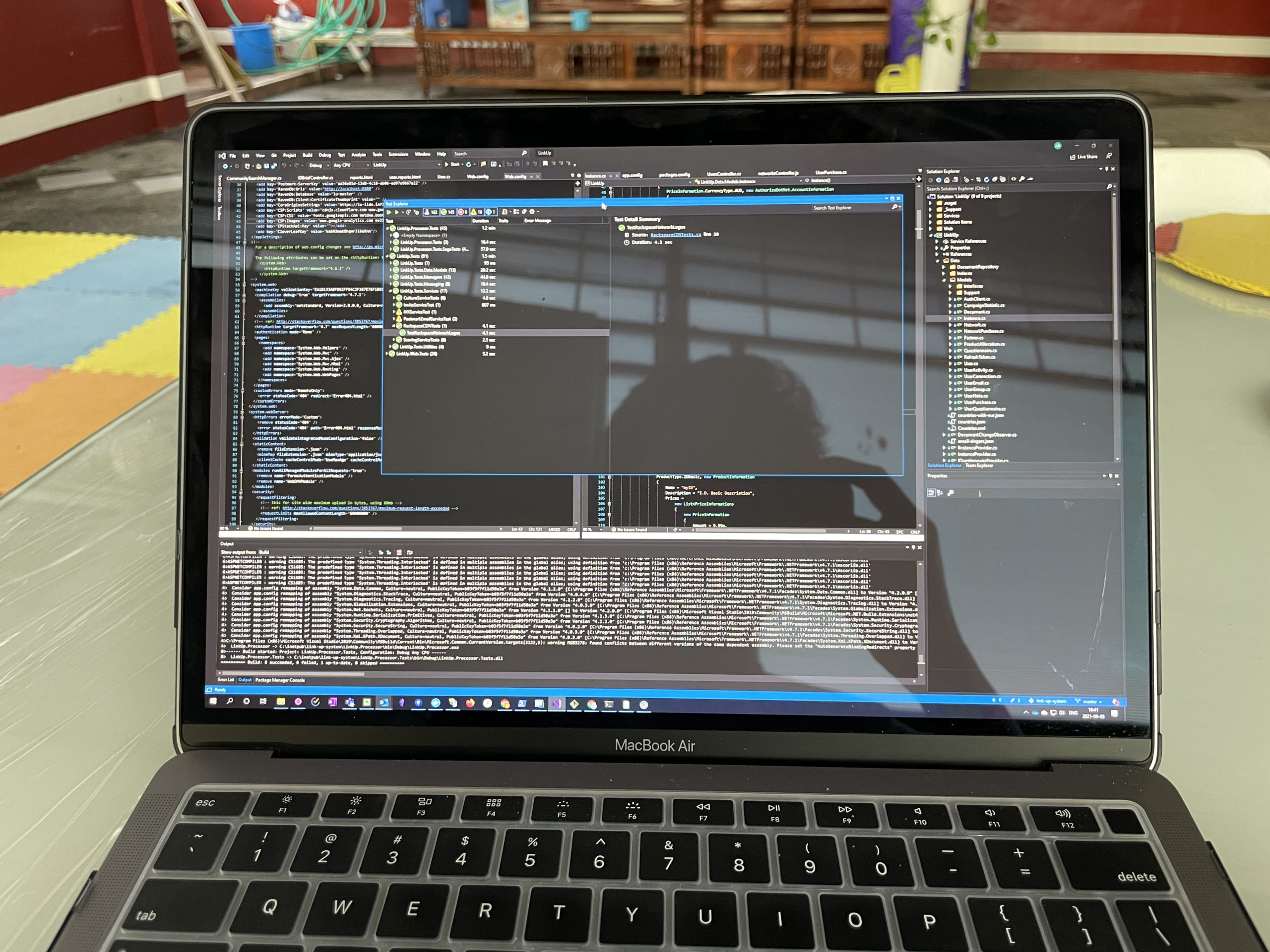
This is me accessing the machine remotely from my Mom’s home (the machine is in my office). As soon as I connect, I resume where I left off. Visual Studio is open, local servers are running, build time is fast, and it doesn’t use too much electricity when idle.
I used to procrastinate making decisions because I fear making the wrong one. I preferred to keep things hanging until somebody else takes action. Even for the smallest things like where should we eat? It gets worse the bigger the decision needs to be made.
Something I admire with Julie and her family is they make decisions amazingly fast. Action takes place soon after. I wanted this pace, so I identified what keeps me from deciding and address it.
I adopted these mindset to prevent option paralysis.
1. A wrong decision is better than no decision
Indecision leads to more indecision. With indecision, I am neither moving forward or backward. It stops momentum.
Things moving are better than things in undecided state.
2. Have a default answer
When asked where to eat, I usually say McDo. I don’t mind if it gets rejected or an alternative is presented. It’s way better than kahit saan (anywhere).
It’s the same with starting with a blank canvas. Starting from scratch is harder than editing something existing (at least for me).
3. I can change my mind (pwede mag-bago ng isip)
Yes, changing minds come at a cost. But the information you get by actually trying things is worth the cost (usually).
If it turns out I made a wrong decision, I’ll acknowledge the fault and change my mind.
This is the same strategy with digital marketing. I can’t really know what ad will work until I try it out. I don’t know and have no control of how people will react. I need to try and find out. Stop the ads that isn’t performing, and double down on those that’s working.
The more information I get, the better decisions I can make.
4. Avoid deciding on things I don’t even have control of
Let’s say I liked a particular job ad. The question I should be deciding on isn’t “Should I apply or not?” (the answer is always yes).
The only time I should decide in this scenario is if I’m at a point where a job is offered. Because in that position, I’m the one in control if I should accept or reject the offer.
Applying to the job alone doesn’t particularly change anything in my life. I shouldn’t think too much about it.
5. Letting go is an option too
If you can’t let it go, face it. If you can’t face it, let it go.
I have to be explicit in acknowledging I’m letting this go to let myself know that I’m really letting it go.
#
These strategies has served me well. I make fast decisions now. I’m action-oriented. And I enjoy moving things forward (or backward as long as things are moving).
Growing up, I heard that investing in a real estate property and renting it out is a good investment. I didn’t understand why. Especially where the required capital is intimidatingly high, I couldn’t even imagine how to earn that much.
We’ve been incredibly blessed though. We got in a position where we can afford it. I also had a goal to purchase each of my kids a property while I still can. The idea is whatever happens to me, at the very least they’ll have a place of their own. But since they are still very young, we thought of trying to rent it out for the mean time.
We were able to purchase and rent-out our first property last year. That’s when it hit me why it was a good investment.
Investment options
When our savings started to grow, I started looking on where to put it. I knew that keeping it in a savings account will make its value slowly eaten by inflation (which is 2.64% last year). So I had this urgency to make it productive. These are the investment options I considered:
Pag-ibig MP2 is most often recommended because it has a high interest rate and relatively safe. It’s interest rate last year was 5.62% and it has a maturity of 5 years.
For our rental property, we were able to rent it out at 1% of the total cost. That’s an annual gross of 12%. Setting aside 2% for tax and maintenance. It earns 10% yearly. Higher than other safe investment options I considered. At the same time, the property itself appreciates in value overtime (I have no idea how to compute real estate appreciation though).
To be concrete, let’s say the property costs 1,000,000. And we’re able to rent it out for 10,000/month, that’s 120,000/year. Then set aside 20,000 for tax and maintenance, that will result to 100,000 net income yearly.
For the past few months I’ve been buying tiny PCs in FB Marketplace because I’m planning to create a homelab Kubernetes cluster for learning. I’ve purchased a lot in the marketplace before and everything went through. Most people are trustworthy. But of course, there are exceptions.
What was the scam?
The seller presented himself as company employee. I was told that they have a warehouse and a procedure of payment-first to process orders. This is a red flag in itself. However, when I checked the pick-up location, the company really do have a warehouse and it’s registered under the company name. This addressed my first concern.
The way the messages was structured was it addresses any hesitation that might come up. It looks like they really do have a standard procedure. I went ahead and transfer the amount agreed to.
And then he’s gone.
At first I felt my anger building up. Then shame slowly creeped in. I felt stupid for falling for it. My initial thought was to keep it to myself. Sharing it would only validate my stupidity.
I somewhat knew that if I kept things to myself, the bad experience will just linger at the back of my mind for days. Even if it’s embarrassing, I shared it to Julie and my friends.
What could I have done next time?
There are multiple ways to catch this con. It’s a little more hassle but for large transaction it’s worth it. Here’s the thing I should have done instead:
Call the company to verify person employment
Ask for an I.D. and live photo of the items
Most sellers offer payment only when the pickup service has arrived — insist on doing this
Avoid large transactions on Gcash/GrabPay because they specifically exclude swindling (transferred money but unfulfilled order) to their protection coverage
What good did come out of this?
I’m actually getting addicted on finding good deals in the marketplace. Even for things I don’t need. There’s this instant gratification in same-day shipping purchase. It’s getting harder to control myself especially when I’m stressed out and my willpower is spent. Now, I have natural aversion on buying. I don’t visit the marketplace any more haha.
Another thing that was surprising is how I was able to regulate my emotion. In less than an hour I was able to accept and acknowledge the situation. I knew that getting angry or feeling shame wouldn’t make a difference. It will only make my loss bigger (by being emotionally invested in something I don’t have control of). I was able to resume my day as planned.
This was good exercise on how I’d react when real bad things happen. I’d say this lesson is well worth ₱15.9k.
#
Here’s the details for SEO: Golden Dragon Enterprise 09334498092 09687683535
I tried an unstructured life for a few months. No wake up time, no schedule, no commitment on deliverables. I was free to do anything I feel like doing. It seemed like the ideal state to be in, right?
I quickly realized though, this kind of lifestyle isn’t for me.
Day after day pass without anything meaningful happening. I had a list of things I wanted to do when I was super busy, but I have a lot of friction getting started.
My main issue turned out to be not having a structure.
I used to think being free means being able to do anything I want. It’s true. But what isn’t obvious is suddenly you have to decide on a lot things. Deciding on every single thing every day is mentally exhausting. “What am I going to do today? What time am I going to start? How much time should I spend on it?”
Pre-deciding is the key
A full-time job have a built-in structure. I wake up, take a shower, go to office. And in the office I have another set of routine to sit-down, identify what you need to do, do it until end of day.
This works because things are pre-decided for me. I didn’t have to think about it. I just have to follow it. That’s why it’s easier to do things.
I still don’t want the 9-5 lifestyle. It’s too rigid for me. What I end up copying is only pre-deciding on things. I start each week with a weekly planning where I check my calendar with upcoming commitments. I then list things I have to deliver within the week and arbitrarily put them any day depending on when it’s expected.
This significantly reduced the friction on how I start my day. Because it was pre-decided already. I just have to sit down and do it.
Structure sets me free in a way I don’t have to think of what I need to do everyday.
Put me in a bad situation and I’ll find a way to blame it on myself. Be it lack of action, lack of insight, or lack of preparedness.
This isn’t some self-pity indulgence. It’s more of putting myself in a position where I could do something.
Imagine the alternative: blaming it on another person. What I’m doing here is just unloading an unwanted feeling to another person. How the other person will react is out of my control. Most likely, nothing is going to change.
Putting the blame on myself let me focus on things I could have done instead. Learn from it and apply it to similar situations moving forward.
Do this only if you have a healthy sense of self-awareness
Lately, I realized that this is only applicable if a person have a healthy sense of self-awareness. There’s a thin line between this and “everything is my fault” attitude.
The key difference is knowing deep down that any mistake is not tied to one’s being. Simply put even if I failed on certain things, I’m not a failure. That’s not how human works. I know that a single failure couldn’t possibly define my whole being.
With this mindset, I’m always forward looking. I see failures as learning opportunities. I don’t feel helpless.
Rather, the discomfort I feel blaming myself is similar to the discomfort I feel when lifting weights. Both increases my capacity. Mental capacity with the former, physical capacity with the latter.
I heard the idea “fake it till you make it” back in college. I tried it a few times. But every time I do, something always felt off. The whole interaction that comes after is usually stressful. I put myself in a position where I have to be careful with my words, where I can’t be fully myself, or share challenges I encounter with what I have to deliver.
It’s a big disservice to the other person because expectations were not properly managed. If they knew I couldn’t do certain tasks, they could’ve tap other people to do the work instead.
Beyond this, faking doesn’t align with my values. I value truthfulness (even if it hurts). If I don’t practice it myself, how can I expect other people to do the same? This incongruence with how I want to live versus how I’m living makes me uneasy. It’s essentially lying to myself.
A better alternative: face it till you make it
The way I approach it now is saying what I’m lacking upfront. I’m straightforward with things I don’t know. I’m more willing to appear like a fool now. No one is expert on everything anyway.
I lay all my cards. I share what I’m good at and how can I help them achieve their goals. I share my plan on how I’ll address my lack of skills.
It’s a risk if they want to continue to work with me. But it’s a risk they can decide for themselves. The other person can make an informed decision.
If they do decide to go ahead, I’d be grateful for the trust. I’d go extra mile to deliver what they need. If not, that’s okay. There are countless other people. I just need to match with people that will benefit with my current expertise.
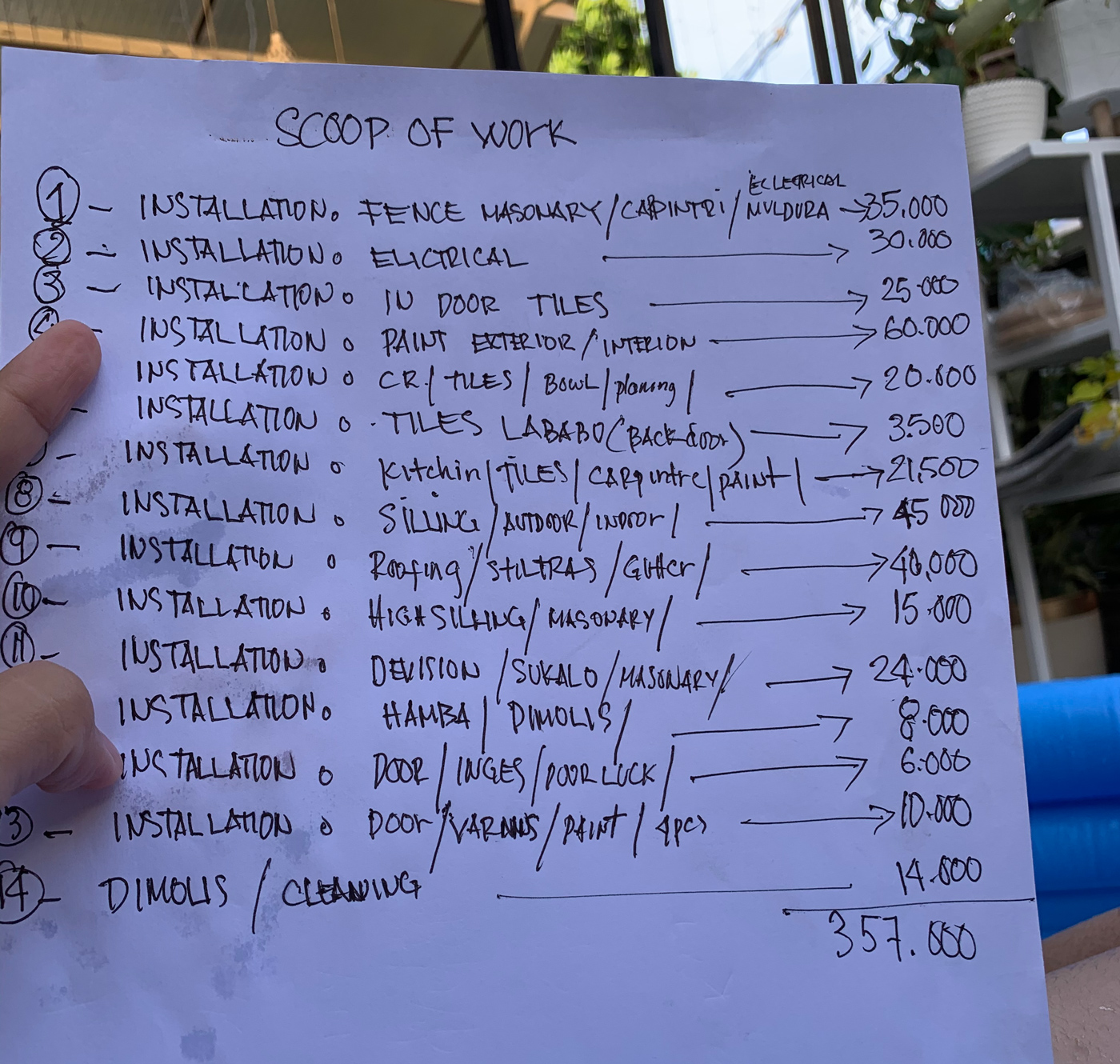
I used to be too critical with grammar and spelling (on myself and other people). I had instances when if I’m not sure I’m absolutely correct, I’d choose to stay silent than say what I wanted to say. Out of fear of being wrong.
Misspelled words here doesn’t mean I’m better than this person. I couldn’t even do anything listed here myself. I don’t have his skill.
I understood that “scoop” meant “scope”, “high silling” meant “high ceiling”. I understood the breakdown of work and it’s cost. Which is exactly what I asked for.
Words are just tools for communication. If another person was able to convey what he wanted to say, then the tool served its purpose. No need to be too critical. That’s what matters, right?
In my younger years, my goal was to be self-reliant, self-sufficient, self-made. Focused mostly on self. I want to be able to accomplish things without relying on anyone. And I was fairly becoming good at it.
The mindset I had was anyone can leave me anytime and I’ll be fine. It seemed like a nice idea at that time. However, this has limited the relationships I had to reach up to surface-level only. I was always on guard. It was very easy for me to cut people off as soon as there’s unpleasantness. There was no chance for relationships to grow.
The older I get though, the more it’s evident that self-sufficiency at a cost of relationships isn’t worth it. Okay, I can manage by myself. Now what? It turns out that dealing, facing, fixing the unpleasantness is a big part of what makes life a more meaningful experience.
Losing self
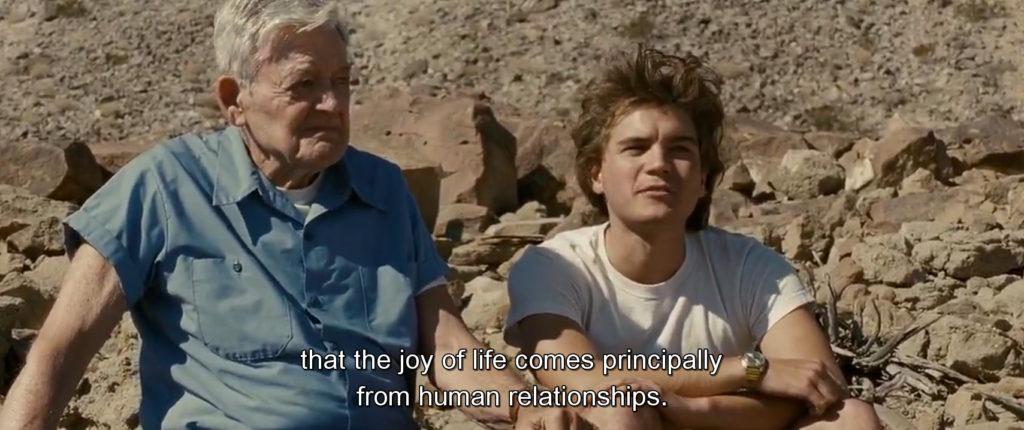
The second lie, is that I can make myself happy. That’s the lie of self-sufficiency. As anybody on their deathbed will tell you, the things that make people happy is the deep relationships of life, the losing of self-sufficiency.
I’ve accepted that I can’t do it all. I’ve been learning how to depend on other people. I try to share my problems even if it’s not natural for me to do. I do this to let them know that they’re safe to do the same. That they can depend on me when they need to.
I also actively reach out. I intentionally keep connections open. I show up to their life events. And it’s worth the effort.
I realized that losing of self-sufficiency is actually expanding of self. There are parts of me that shows only when I’m with people I trust and depend on. I did not lose anything. It’s quite the opposite. I gained a better understanding of myself.
I remember getting shocked with my first credit card bill. Total amount is almost the same amount as my full-time job salary. 😅
That was 8 years ago.
Mabilis ako madala e. Soon after that, I looked up how to properly manage my money. This is when I found YNAB (You Need A Budget). It’s a budgeting software. Its value isn’t in the software itself, it’s in their methodology. It provided me structure on how I should think about money.
First phase is explicitly deciding where to put in all my money.
The goal here is to have an idea where my money is going. I can’t improve what I can’t measure right? Having a handy list of my budget, upcoming expenses, and current state of my net worth made it really easy to decide on unplanned purchases.
This also made me treat credit card spendings as money spent. It’s instantly deducted to my net worth as soon as I spend it.
Second phase is aging my money.
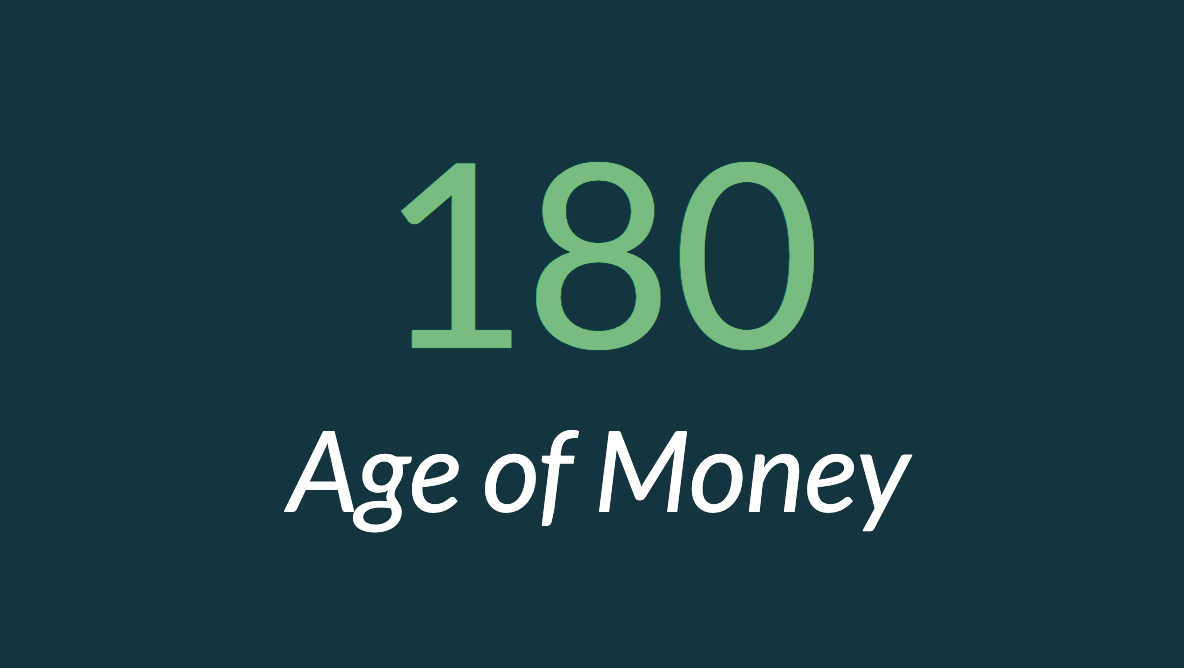
YNAB have this concept called “Age of Money”. It means how long your money stays with you before you use it.
I recently got to a point where my age of money reached 180 days. This gave me flexibility to plan ahead, take risks, and try new things.
Beyond YNAB
What I’m looking for to do next are investing on a business and stocks.
I’m like a sponge now absorbing information from r/phinvest. Taking action to things that’s starting to make sense to me.
No matter how much I plan, I still go through a phase where I just have zero
motivation to do anything at all. I find myself wasting my day away. I know what
I’m supposed to do, but I can’t find any energy to do it.
I used to wait it out until I get tired of being unproductive. However, that
isn’t always possible. Especially being adult and having people depend on me. I
have to find a way to get around whenever I’m in that state.
I have developed a checklist I follow that helps me back on track.
Getting back on track checklist
Sort out finances
This is one of the easiest tasks because it involves a clear goal: checking
bank accounts, credit cards, and cash. Having a clear understanding of my
financial standing significantly reduces my anxiety.
Brain dump - Write down everything that’s on your mind. You don’t have to
act on it, but acknowledging its presence through writing helps you make
sense of the thoughts in your mind.
Things I need to do, want to do, don’t want to do.
Things I’m trying to avoid thinking about.
Exercise - Walk, run, push up, pull up.
I don’t need to complete a full exercise routine; the primary goal is to
elevate my heart rate. In some instances, the body influences the mind.
When my heart beats fast from exercise, my mind shifts from low-energy to
an excited state, as if my body dictates my emotional state.
Eat the right food
Eating the right food is crucial because an unbalanced diet affects both
mood and cognitive function. The mind and body are closely connected, so if
I lack essential nutrients or consume too much junk food, it can lead to
feeling off.
Disconnect
We have become such experts at being always in touch, informed, connected.
Now we must relearn how to be silent, disconnected, alone. - Alain de
Botton
Food for the body is like information for the mind. If I constantly consume
anxiety-inducing news, my body can’t help but feel anxious.
Pay attention to what I pay attention to.
Optimize on output.
It may not work out immediately, but with consistent effort day by day, there
will come a point where I’ll surprise myself that I’m already doing fairly well.
I have been consistently working out for more than 80 days because of
stay-at-home orders. This has been the habit that had the most impact in the
quality of my life.
Keystone habit
A keystone habit is a habit that you can “attach” other habits to. It’s one
habit that triggers a set of other good habits.
For working out, what happens after I’m done are:
I shower - because I stink.
I log my body composition (weight, body fat) - to track my progress, makes
me a bit more aware with changes in my body.
I eat good food, drink a lot of water - to address what the body composition
scale suggests to improve.
I take my vitamins.
There’s this idea that the better you take care of yourself, the better you’ll
handle life. With my body getting used to physical stress, it makes me better
prepared to handle unexpected stressors that will inevitably come my way.
I gave up on the idea of “beating” procrastination. I’ve tried all the to-do apps and all the productivity hacks. I just accepted that it’s part of my nature and I should embrace it.
Not mindlessly embrace it though.
Introducing a competing response
A competing response is a pre-decided alternative action when a specific habit triggers.
Let’s say I’m having a hard time on a specific task. My default action is to take a break and browse reddit/twitter/facebook. My competing response is to spend time with my family instead.
I’m taking a two-month break of taking in new projects. Not out of burnout, but out of desire to try a different direction. I have this itch of starting something of my own initiative. This is especially hard for me because I’m not a visionary. I’m more of the person someone would trust executing a vision.
Timing also feels right as I’m turning 30 in two months. This is the kind gift I want to give myself before starting my next decade.
My focus for the next few weeks
This website
Create structure/framework/process that makes it real easy for me to publish and share
Create a habit of sharing of things I’m doing and learning
I love to teach. Sharing my journey teaches other people too.
Create a habit of writing and publishing
Publishing is the notable change here. By publishing, I’m forced to articulate my thoughts in a way another person can understand it.
I have this guilt that I’m doing so well with Coronavirus’ quarantine. The only thing that changed with my routine is I haven’t been able to go to Starbucks to work. It feels unfair and wrong that a lot of people are in a bad place.
I know that, by nature, people tends to help those in need. The problem is there’s a lot of people in need and it’s obvious that I can’t help them all. There’s this choice paralysis on how and who to give assistance to.
The strategy I adopted to workaround this is: fill your cup and let it overflow around you.
First, I make sure that my family are taken care of. This means that I feel secure that we’ll be able to weather the crisis in the next few weeks despite the uncertainty.
Then, I give away the excess I have to people around me that I’m aware needs help. Relatives, employees, coworkers, old classmates, kapitbahay, friend of a friend, kapitbahay ng friend, it doesn’t matter who. As soon as I knew about their struggle and I know how to help, I do it. I even reach out and ask about their situation.
Meritocracy doesn’t apply here. There’s no qualification if someone deserves help or not. No one deserves to be hungry.
Walking the talk: My cup is full. I already gave away more than 100% of my pay this month.
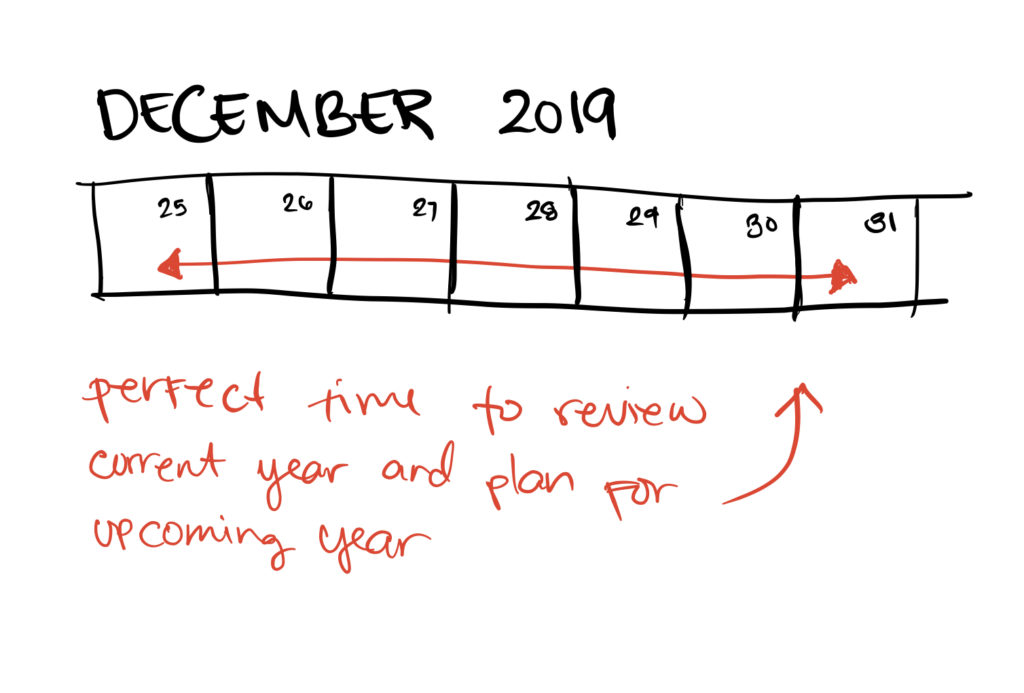
The time after Christmas and before New Year is a perfect time to stop and reflect.
There’s a lot of downtime. Almost everybody stops working. There’s minimal pressure to work.
Looking back makes me relive the good stuff. It also makes me think about how could I better handled the bad stuff.
Looking forward gives me clarity where I want to go. If I have that vision in mind, I have a reference to check if I’m still on the right track and reassess if I want to continue the path I’m in.
Questions I ask myself to kick-start my introspection:
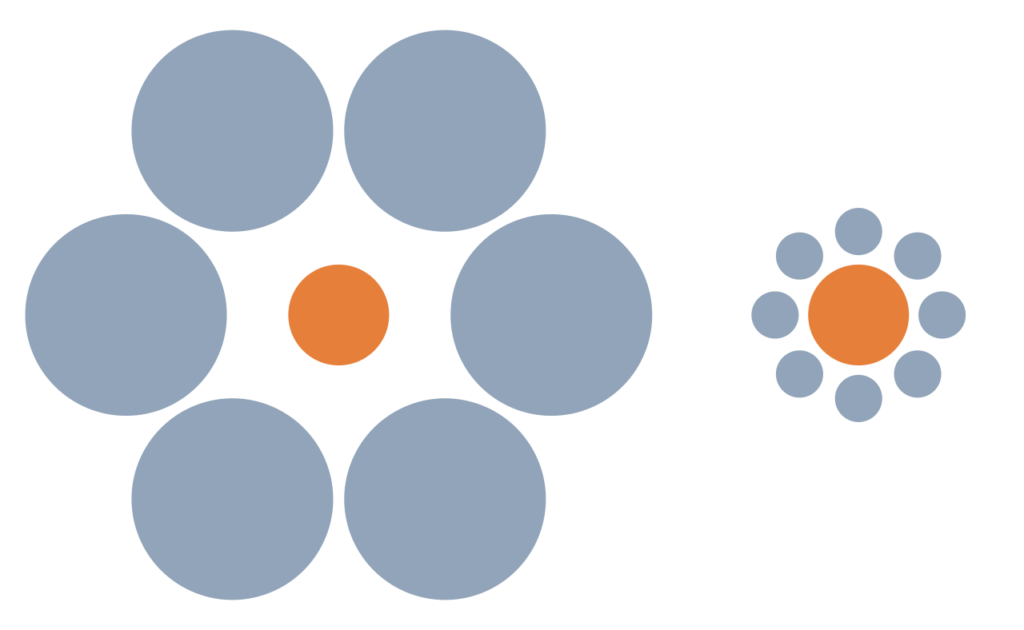
This is an optical illusion called Ebbinghaus illusion. It shows that when you put a circle around bigger circles, it looks smaller. But when you put it around smaller circles, it looks bigger despite that there’s no actual difference in size.
There’s this saying that you are the average of your friends. I think it’s the same thing, because we tend to be around people we don’t feel little in.
We are inclined to avoid uncomfortable situations.
If we want to grow, being the circle with bigger circles is a more optimal position to be in. There’s a lot of room for growth.
Unlike being the circle with smaller circles where we already feels big, there’s no incentive to grow.
When I hear the word unfair, it usually comes from the perspective of the one being taken advantage of.
I didn’t realize that being in an unfair situation has a good side too. We can be unfair by giving more than necessary, by giving benefit of the doubt when it’s not warranted, by being the more loving when it isn’t even reciprocated.
I think this is the unfairness we should strive for. To be on the giving end. To be in a position where we have too much, we absolutely have to give without expecting anything in return.
Life isn’t fair. It’s good that we strive for fairness. It’s even better if we strive for unfairness, but on the giving end.
I’ve been dreading having another unexpected stressors for the past weeks because it kept throwing me off-balance. Every single time it happens I get flooded with anxiety, which make me not able to function properly. I end up binge watching a Netflix series which only exacerbate my problem, which causes me more anxiety, until I’m at a full stop. My knee-jerk reaction is to wish for a life without stress.
There are rare moments though when I regain enough self-awareness to understand what’s going on. I realized that my anxiety will not be solved by a stress-free life. Stress are inevitable. My anxiety will be solved by knowing that I have the capacity to handle any stress that come my way. Instead of wishing it to go away, it’s better to wish for increased capacity to handle stress. Being better at handling unexpected turn of things. That is the way forward because it prepares me to whatever lies ahead.
How should I deal with it next time it happens?
Ask yourself “What’s the worst thing that could happen? R u gonna die??”. If not, consider that your brain is most likely exaggerating it’s effect on your life. If the worst thing that can happen is losing your job or client, you can definitely find another one.
Exercise and eat right. Mind and body are obviously connected. The better you take care of yourself, the better you’ll handle life.
Reframe stressors as life’s challenges. It’s like a puzzle that’s waiting to be solved. Solving it will reward you a natural high (a flood of oxytocin).
Pray. Praying is an exercise of self-awareness. When you pray, you put in to words what you‘re wishing for. Putting it to words makes your thought concrete. A concrete thought gives you clarity and helps yourself understand what you are going through. It helps you focus on things you can do for yourself. For the things that’s out of your control, you can leave it to God. Do your part, then let go and let God.
All these will most likely turn my anxiety to ansaya teh.
I’m starting a personal weekly goal of producing something I can show. The idea is based on Patrick McKenzie’s advice with the same title. Ever since I read it a few years back, it stuck with me. His advice boils down to: Don’t end the week with nothing. Prefer to work on things you can show. Ship it and intentionally seek feedback. A week seems the sweet spot with the way I operate. Shorter time means there will be too much pressure and I’ll just abandon it after a few days. Longer time means the project will be dragging. With a week, I can catch up if I miss a few days on not working on something at all, but with the right amount of urgency.
What should I work on? What qualifies a work that I can show here?
Ideally, I want to work on things that utilizes my accumulated capital. Something that demonstrates value I can provide. However I’m sure that it will not always be the case every week. I can work on things that enriches my life in any way. Be it writing a helpful blog I can reference in the future and publishing it. At the very least, I can work on anything I want as long I have a concrete valuable output to show. Just don’t end the week with nothing. This page will act an index what I have to show every week. Week 08: Personal DashboardWeek 09: Julie’s Contract MakerWeek 10: Homebridge integration with Broadlink Week 11: THTF Facebook Bot Week 12: ERPNext implementation at CLP Week 13: Week 14:
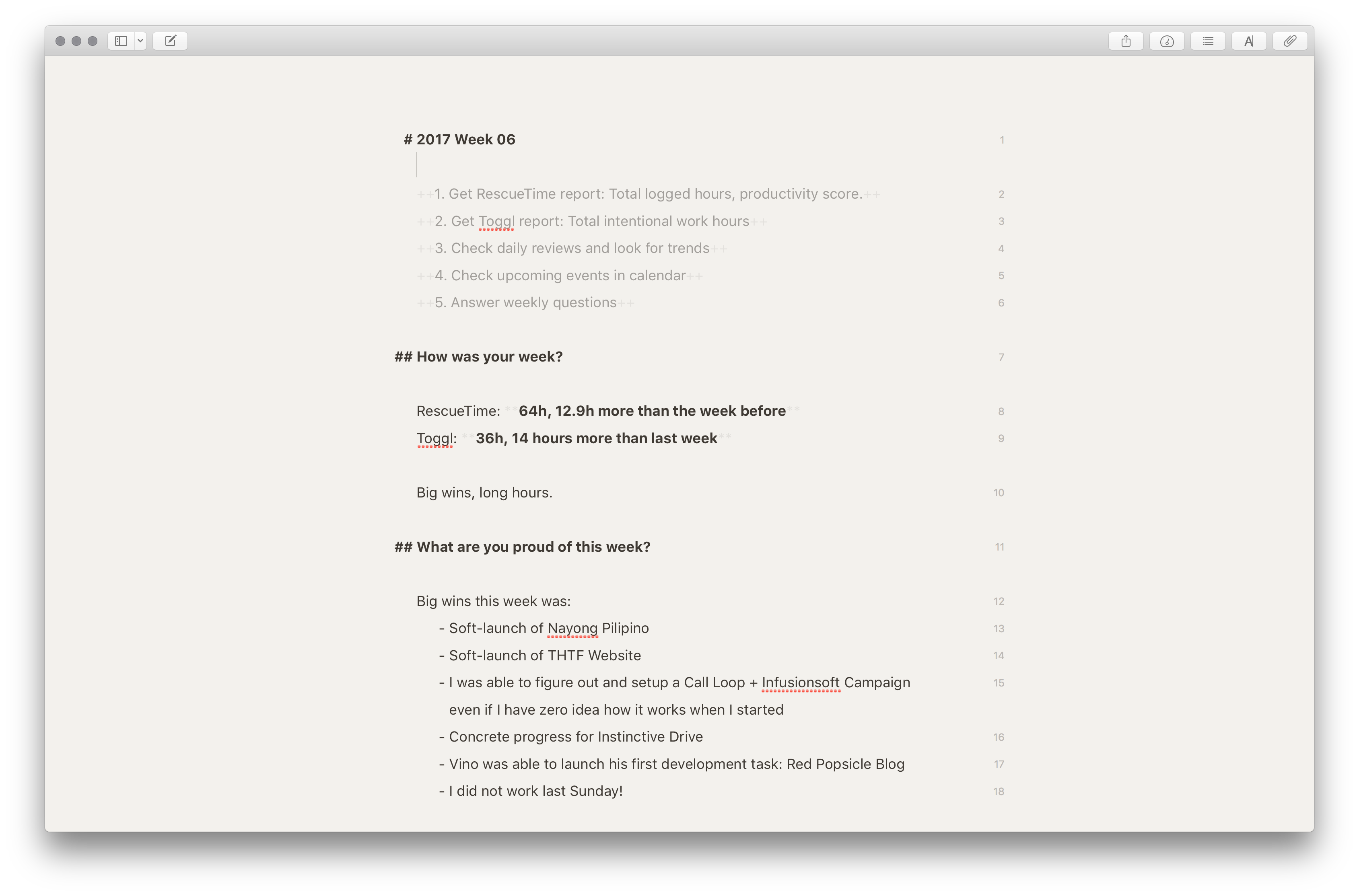
I figured that Monday is the perfect time to review my week. I have a fresh outlook and high energy because of the weekend break. I always try to follow this one important rule: Don’t end the week with nothing. If I get to accomplish a single important thing every week, I consider it a big win. What are my wins this week? What needs improvement?
Another important part of my reviews is to plan my upcoming week. What do I need to look out for? What do I want to accomplish?
Reviews easily takes 1-2 hours to do. Despite the hours it takes, I see it as worth the time because it helps me realign whatever am I doing now to the big picture I want to be in. It helps me see if I am at the right direction or am I straying away.
Right questions helps me focus on the right things. Currently, the questions I ask myself during reviews are:
How was your week?
What are you proud of this week?
What needs improvement?
Do not end the week with nothing. What’s the single most important thing you need to accomplish next week?
What’s upcoming this week? What do I need to look out for?
Read one book at a time. While reading, highlight and take notes ideas that come up to your mind. At the end of the book meticulously edit your notes to make each idea self-contained for future lookup. Add the self-contained idea to your Anki flash cards. Move on to the next book after you have finished editing your notes and published it. Shelve your book and you can move on to the next.
What should I read next?
Area I want to improve on, inline with my stretch goals - check learning path mindmap
Something that induce a terrifying longing. Making me drop everything else to pursue it.
So this is my simple observation: When deciding to embrace a self-motivated ambition, choose a definition of success that your aunt in Peoria would understand and find impressive. This is not about succumbing to the status quo, but instead setting yourself up to receive the brutal but useful feedback needed to eventually start producing things too good to be ignored. - Pursue Metrics that Matter, Cal Newport
I’ve been thinking of making my workflow vim-centric again, just because. Then this got me thinking: Getting better at vim will give me nothing. It will not get me closer to any goal I have now. PhpStorm works perfectly fine. It’s heavy, yeah. But so what? My machine can handle it pretty good. Ewan ko ba bakit na attract ako sa idea na of “get better” at vim. It does not provide value. What I mean is, the effort I will put in it does not convert to something of valuable. Pursue metrics that matter. Getting better at vim does not matter. Getting better at coding does. Better yet, getting better at achieving goals that improves my life is the thing that truly matters. Focus on getting better at creating things instead.
I’m not the type who bash at other programmers just because our “way” of thinking doesn’t align (most of the time).
Reading other’s people code and doing something about it is like stepping in someone else’s shoes. I asks all the why’s. Why did he do this, why did he do that. I try to think like the person who coded the thing.
Best practices are there for specific scenarios. There are no universal best practice. Early bird does not apply on going on a field of landmines.
The more “way” I know the better I get at choosing what’s the best for the situation.
This is why I’m getting paid by the premium. It’s because of the different “ways” I tried before and the lessons I learned from them and knowing which is the best for this specific situation.
Adjusting is normal, expected, and encouraged. It means you’re setting a plan, then adjusting that plan as new information arrives. — You Need a Budget: Rule One
This is from a budgeting methodology. However, this also applies to planning in general.
Things rarely go according to plan. But that doesn’t mean planning is useless. Planning gives you enough insight to know what to anticipate. What was planned isn’t absolute. It can and should be adjusted as events unfolds.
I’ve been reading @iamdevloper tweets. I’m surprised that I can relate to most of the stuff posted there. Just a reminder that what I’m experiencing is not unique to me. Somebody else has already gone through it.
I especially liked tweets that reminds me to question myself if I’m giving attention to the right things. I’m prone spend too much time looking for the best solution to things that may not add much value. In the end, time spent on it is disproportionate to gained value.
Every 100ms of latency costs Amazon 1{5fcd3cbc9de14e1587c4b983f08e4837fa7ae8985dc66bae235a2c5aa0d68677} of profit, every 100ms of latency you save on your shitty web app cos-No one cares.
There is a very old story, often told to fill time during training courses, involving a man trying to fix his broken boiler. Despite his best efforts over many months, he simply can’t mend it. Eventually, he gives up and decides to call in an expert. The engineer arrives, gives one gentle tap on the side of the boiler, and stands back as it springs to life. The engineer presents the man with a bill, and the man argues that he should pay only a small fee as the job took the engineer only a few moments. The engineer quietly explains that the man is not paying for the time he took to tap the boiler but rather the years of experience involved in knowing exactly where to tap. — Excerpt From: Richard Wiseman. “59 Seconds”
Individuals’ efforts to pursue their own interest may frequently benefit society more than if their actions were directly intending to benefit society —Adam Smith
I always say, ‘Look, I’d rather you take an extra minute or two and slow up service to get it right.’ Because the one minute behind you are now is going to become six minutes behind because we’re going to have to redo the plate. — For A More Ordered Life, Organize Like A Chef
One of the things that seems counterintuitive is not to rush things especially if you need to rush things.
Rushing leads to low-quality, compromised work that may take you more time in other, not-obvious ways.
To conclude, programmers work at night because it doesn’t impose a time limit on when you have to stop working, which gives you a more relaxed approach, your brain doesn’t keep looking for distractions and a bright screen keeps you awake. — Maker’s Time
I code better when I’m relaxed. When there’s too much to think and worry about, I just can’t function properly. Most of my background processing are spent on worrying.
Note to self: have enough time to play around while coding. That way, you enjoy the actual work.
I did not know how to do it right, so first I did it wrong.
One thing that prevents me from doing a lot of things is the fear of being wrong. Much more worse than doing something wrong is not doing it at all. Hindi obvious sa akin to dati: being wrong is a really good form of feedback. Kasi it hurts. Ngayon I try to use that feeling as a cue na I need to change something. Feedbacks are key things in getting better. Don’t pressure yourself to do it “right” the first time. If you got it wrong, celebrate! Because now you’ve got something specific to improve on.
Mahalaga pala matuto mag overlook. Of flaws and superficialities, and of things that doesn’t really matter (right now or ever). It frees the mind for more important things.
One thing I learned from Julie is learning how to ask.
I usually over think when I’m about to ask for an extra ketchup or a raise. It doesn’t matter which. I just… over think.
I got from her that it’s just a freaking question and people can just say no if they don’t want to.
Don’t make it such a big deal.
Making it a big deal: This is another thing I need to address. Since I spend a lot of energy before asking, I get offended by those who say no to me. Rejection is something I dread hearing. This one of the reasons why I’m afraid to ask in the first place.
Rejection is fine, don’t make it such a big deal. You can just go ask somebody else. Life doesn’t end on rejection. If you can’t go straight ahead, go find a workaround.
I just sorted out all my debt and budgeted my remaining money yesterday and it felt I’m in control of my life! Haha
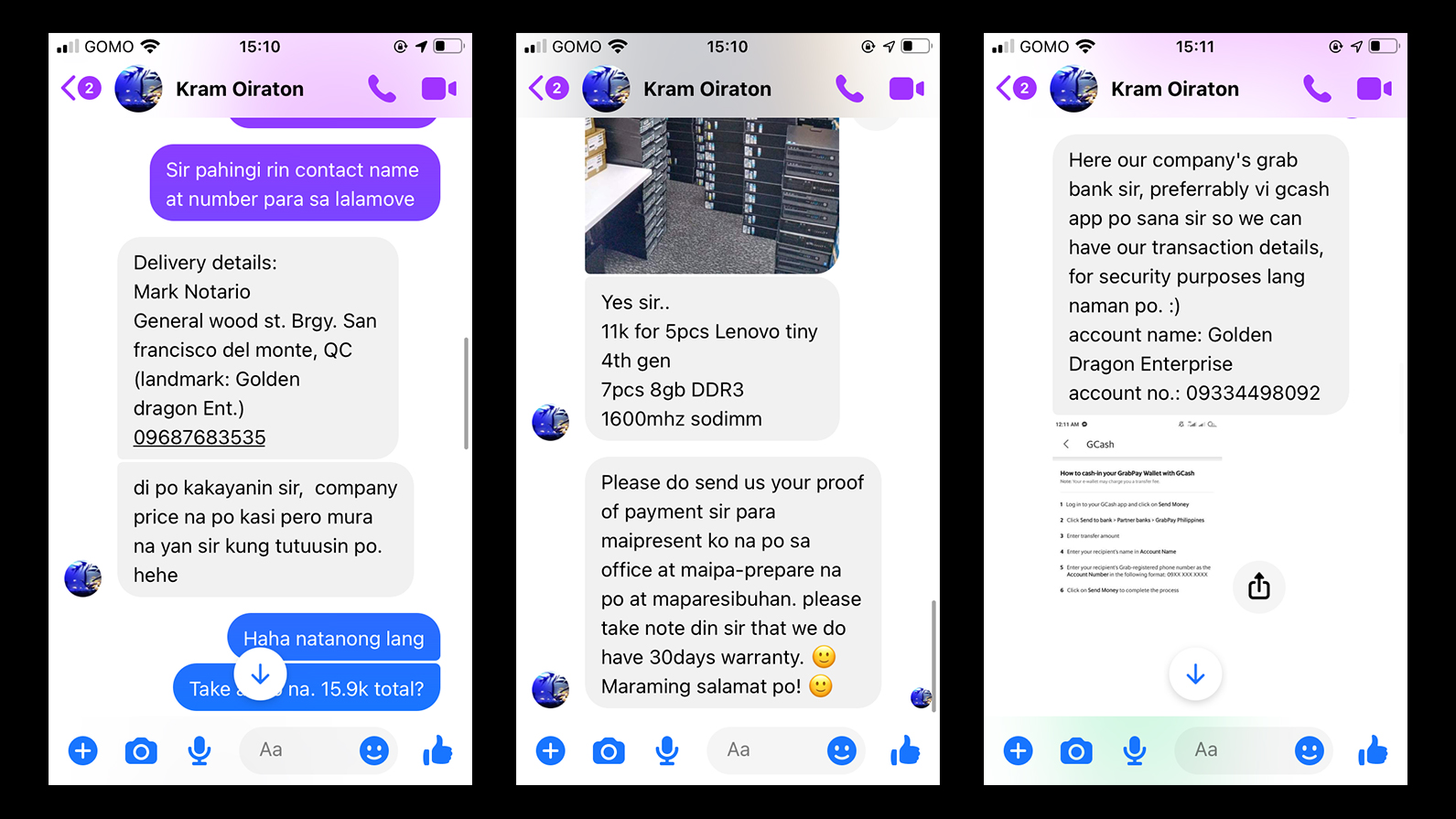
There’s this fresh start feature on YNAB that will hide all your previous, probably unaccounted, transactions. It eliminates the burden of what-has-been.
The idea is: you only need to think on what you have now and what will be your future spendings. You just can’t change anything to what was spent, just let it go and clear your mind of it.
Maybe it’s the same with blogging. I have been wanting to write for a long time, I was just waiting for my excuses to dry up haha.
I got most of it wrong. Akala ko you just preset yourself, your skills, your education and that’s it. It’s up to the employer to figure out how they’ll use you. Dalawa lang daw goal ng companies why they hire
Increase revenue
Reduce cost
Use that insight for every decision you do about your resume. Pano mo made-demonstrate na you can increase revenue or reduce cost? What do you bring to the table? Make it easy for them to see what value can you deliver Sell yourself kung baga You don’t sell a product (yourself) by what it can do, you sell a product by what it can do to make your (company’s) life easier/better