#aws

3 posts.

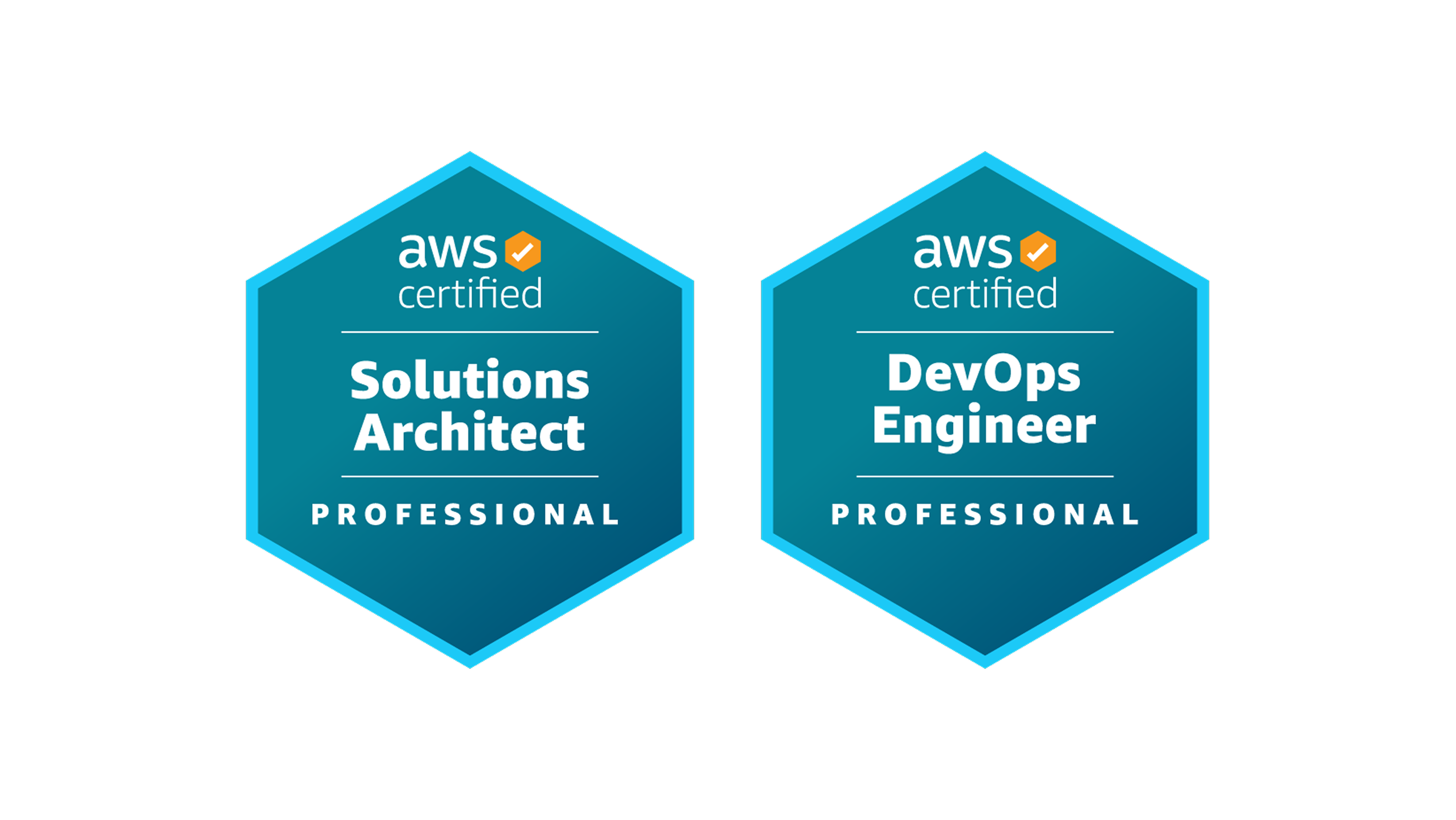
Passed AWS Solutions Architect Professional & DevOps Engineer Professional
/
AWS Solutions Architect Professional and DevOps Engineer Professional badges

I passed AWS Solutions Architect Associate last December. At the end of that post I mentioned I’d pursue the Professional tier next. Passed Solutions Architect Professional on February 15. Then took DevOps Engineer Professional on March 19.

One day of prep for each (the day before). I mostly banked on production experience. Most of what came up in the exam, I’ve encountered at work in some form.

SAP felt like a more comprehensive version of SAA. I finished in two hours out of three.

DOP was a lot harder than I expected. It was less about architecture and more on the specific behavior of AWS services. A lot of EKS questions came up and we don’t use Kubernetes at work. I guessed on those. I flagged 30 questions total. I went back and re-read each one carefully. I used the whole three hours, super exhausted. I was honestly bracing myself for retaking it. Luckily, I passed.

I joined my current role without even knowing what Terraform was. I only knew web development and LAMP stacks. I always had this doubt at the back of my mind whether I’m actually a cloud engineer or just got lucky landing the role. SAA felt too easy and didn’t really move the needle on that.

DOP being tough and still passing did. It’s not something someone could LLM their way around. Almost everything I relied on was things I actually learned on the job. That’s what made it feel different. I feel much more genuine with my title now. More confident with my voice. These exams showed me I can reason out architectural design decisions.

I don’t plan to take more certifications anytime soon. But if I ever did, it’d be CKA or CKAD. The amount of EKS questions on both exams made me realize how much I’m missing there. ECS is what we use at work but it’s AWS-only. Kubernetes is cloud-agnostic, can run anywhere including self-hosted, and it’s almost synonymous with DevOps at this point.

I want to widen the net.
Passed AWS Solutions Architect Associate

/
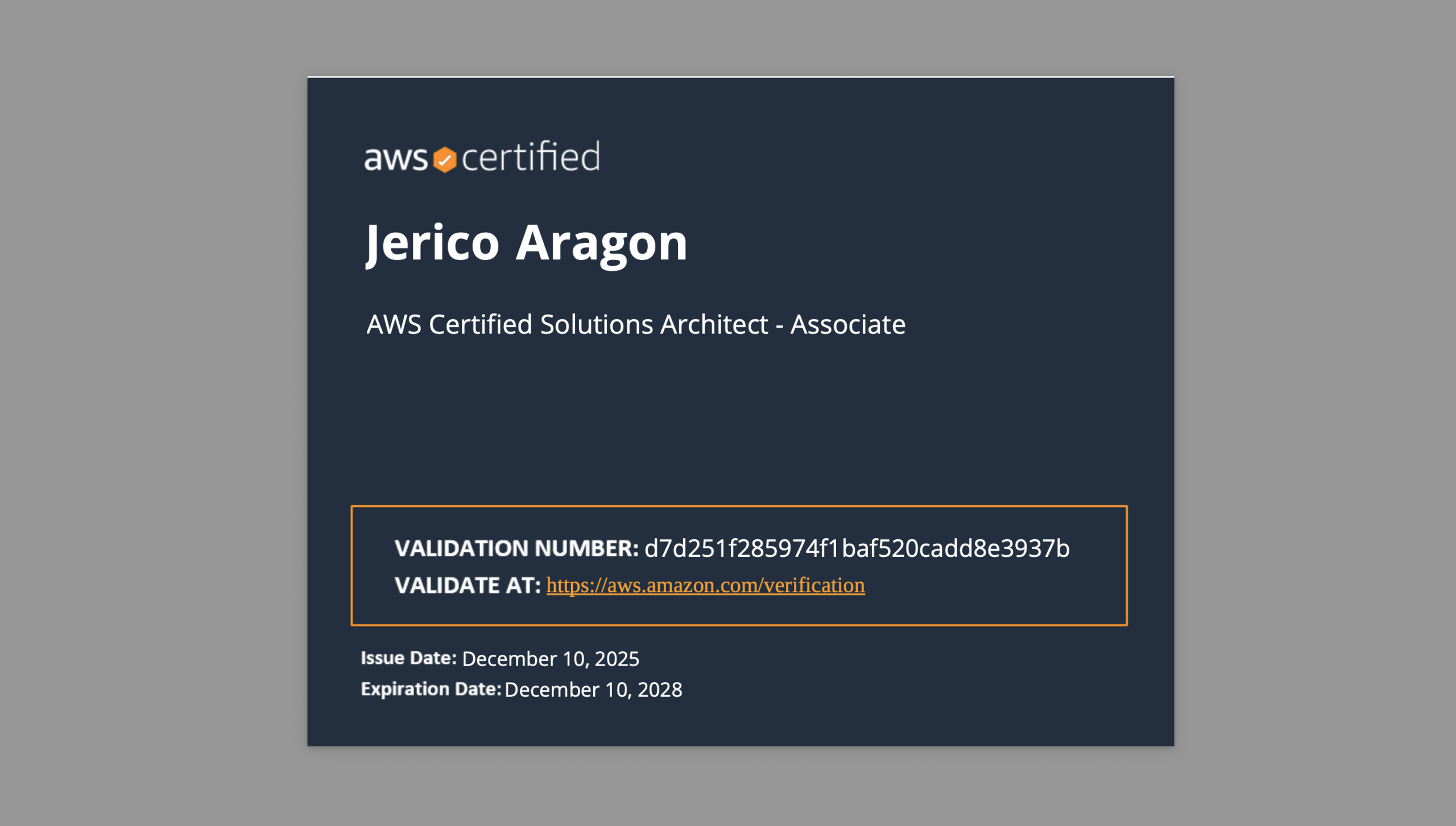
AWS Certified Solutions Architect - Associate certificate

So, I finally took and passed AWS SAA-C03. 4 years of procrastination, 2 exam reschedules, and 3 days of actually soaking my head in SAA topics.

As most of the things in my life, I spent more time stressing for it, and when I actually pushed thru working on it turned out to be easier than expected.

I spent 40 mins out of the 130 mins allowed. There were about 10 questions I had absolutely no idea about. The rest were fairly straightforward. The questions I did not know weren’t like some architecture questions, more on familiarity on what a service actually does. Anything CloudFront, S3, EC2, ECS, Lambda, VPC I was able to answer confidently. These are services we actually run in production. Having real hands-on experience helped a lot.

I think getting a certification did its purpose, filling in gaps with my AWS knowledge on things we don’t use but actually could be useful. Fun to learn about different storage solutions and appropriate uses. Fun to learn about AWS Org.

The exam felt unusually easy. It didn’t remove my impostor syndrome of being a qualified cloud engineer. Instead, it clarified that the gaps are less about fundamentals and more about reasoning across larger systems. I decided to pursue the more tougher exam Solutions Architect – Professional (scheduled Q1 next year).

Let’s see where this goes.

Finding a Way Around origin_shield Drift

Every Terraform plan flag a change in our CloudFront distribution (even when nothing is actually changing).

The issue was origin_shield. When it is disabled, AWS drops it from the response. Terraform sees it missing and adds it back with enabled = false every run.

So every run you would see CloudFront being changed. Big deal because it’s the CDN, misconfiguration could bring down a site. What ends up happening is we always had to inspect the change.

The obvious fix was to make the block dynamic so it only appears when origin shield is actually enabled.

dynamic "origin_shield" {
  for_each = var.enable_cloudfront_origin_shield ? [1] : []
  content {
    enabled              = var.enable_cloudfront_origin_shield
    origin_shield_region = data.aws_region.current.name
  }
}

Drift was gone, plans were clean. But then I found the other side of the problem.

If origin shield was enabled, then later disabled, Terraform would plan to remove the block. The plan looked right. Apply ran. Nothing happened. Origin shield stayed on in the AWS Console because the provider simply removed enabled = true but AWS needed an explicit enabled = false and we are back to the original problem.

We filed a bug report in April 2022. Three years passed, it’s still open.

I can’t fix the provider, but I really really wanted a clean plan/apply in our infrastructure.

I figured, I could work around it by using a null_resource that only exists when origin shield is disabled. When it runs, it calls the AWS API directly and forces OriginShield.Enabled = false.

resource "null_resource" "cloudfront_origin_shield_disable" {
  count = var.create_cloudfront == "yes" && !var.enable_cloudfront_origin_shield ? 1 : 0

  triggers = {
    enable_origin_shield = var.enable_cloudfront_origin_shield
    distribution_id      = aws_cloudfront_distribution.default[0].id
    script_hash          = filemd5("${path.module}/bin/disable-cloudfront-origin-shield.sh")
  }

  provisioner "local-exec" {
    command = "${path.module}/bin/disable-cloudfront-origin-shield.sh ${aws_cloudfront_distribution.default[0].id} wordpress"
  }

  depends_on = [aws_cloudfront_distribution.default]
}

The null_resource only runs on the transition from enabled to disabled. It fetches the current config, exits early if origin shield is already off, and only patches it when needed.

CLOUDFRONT_CONFIG=$(aws cloudfront get-distribution-config --id "$DISTRIBUTION_ID" --output json)
ETAG=$(echo "$CLOUDFRONT_CONFIG" | jq -r '.ETag')
DISTRIBUTION_CONFIG=$(echo "$CLOUDFRONT_CONFIG" | jq '.DistributionConfig')

jq --arg origin_id "$ORIGIN_ID" '
  .Origins.Items = [
    .Origins.Items[] |
    if .Id == $origin_id then
      .OriginShield.Enabled = false
    else
      .
    end
  ]
' <<< "$DISTRIBUTION_CONFIG" | aws cloudfront update-distribution \
    --id "$DISTRIBUTION_ID" \
    --distribution-config /dev/stdin \
    --if-match "$ETAG"

I distinctly remember being very satisfied that it’s working after spending couple of hours on this bug. Every re-run took minutes! When it finally worked, I felt so relieved.

The bug is still open, but at least our plans are finally clean.